What’s your food’s carbon footprint?
Lately I’ve been thinking about how to make my diet more environmentally friendly. Food production is responsible for a quarter of all greenhouse gas emissions that contribute to global warming, according to a University of Oxford study. There’s a great deal of information around at the moment about the impact that different foods have on the environment, but one thing’s for sure and that is that meat and other animal products are the main culprits, making up more than half of that figure. That’s why I’ve cut down my meat consumption to once a week and taken a very small step in the right direction.
However, the conclusion that most research comes to is that if we’re serious about reducing global warming, then we all need to become vegan. I strongly believe that this is true and that if the human race survives the consequences of all the environmental devastation we’ve created, then in the future we will all be eating plant-based foods. But like a lot of people, I don’t think that I can make this dietary transition in one step.
So, using the Climate Change Food Calculator (BBC News), I have tried to work out how I could do it in stages, looking at proteins to start with. Now, the calculator is simple and does not include all foodstuffs but it gives you a very good idea of how proteins compare on the ‘environmentally unfriendly’ scale. Beef is at the top of that scale. If you ate a 75g portion of beef 1-2 times a week, over an entire year, your consumption of beef contributes 604kg to your annual greenhouse gas emissions. In plain speak that is equivalent to driving a regular petrol car 1,542 miles; or heating an average UK home for 95 days; or 1 return flight from London to Malaga.
OK, so meat’s not good. What about fish, then? The calculator only gives you the option of farmed fish. Eating 140g (one cod fillet) 1-2 times a week over a year would result in a figure of 146kg per annum. That’s 373 miles by car and 23 days heating. But, whatever you do, don’t get on that plane, because you’re not going to get to Malaga. Interestingly, pork is only just below fish on the scale, with chicken quite a bit lot lower. I wasn’t expecting that. So if you can’t give up meat completely, then chicken is the option to go for.
Dairy foods are next, in particular – cheese. I love cheese, in all its varieties, so it was with a great deal of trepidation that I put it into the calculator. A 30g serving of cheese (that’s not much!) 1-2 times a week results in a figure of 75kg of greenhouse gas emissions; or 193 miles by car; or 11 days of heating. The amount of cheese I eat in a week is going to bump that figure up a huge amount. Something will have to be done here!
The most environmentally friendly protein is not beans; and it’s not tofu, which is a relief because, although I’ve never tried it, curdled soymilk pressed into cubes with coagulants doesn’t sound too appetising to me. It is, in fact, nuts. One handful of nuts, 1-2 times a week results in 1.1kg of greenhouse gas emissions which, over a year, equates to 3 miles by car; or 0.2 days of heating.
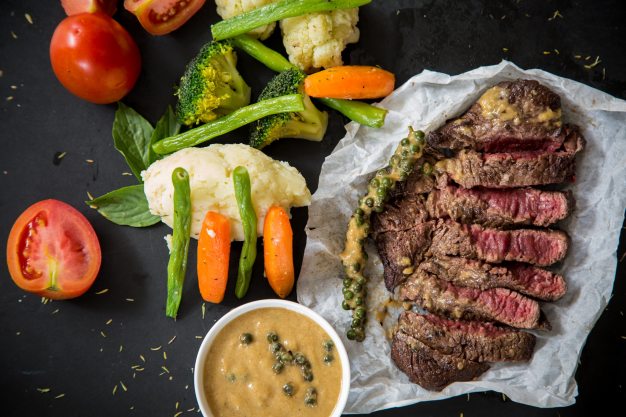
Photo by Malidate Van from Pexel
 sue yockney