Viral City (Happy Deathday: Part 3)

Viral City Full v7

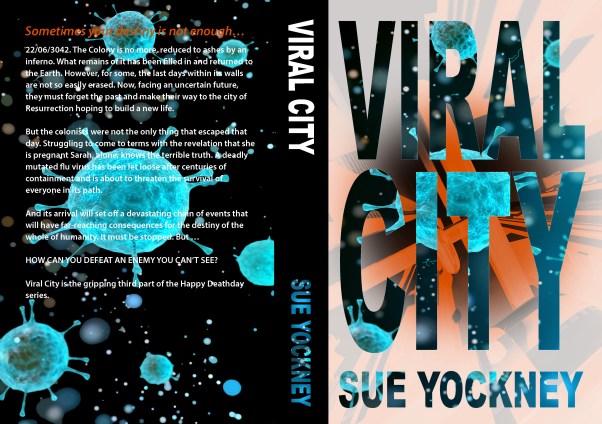
Another milestone on the road to publication! I’m very pleased to be able to reveal the full cover for the paperback version of Viral City (Happy Deathday: Part 3).

22/06/3042. The Colony is no more, reduced to ashes by an inferno. What remains of it has been filled in and returned to the Earth. However, for some, the last days within its walls are not so easily erased. Now, facing an uncertain future, they must forget the past and make their way to the city of Resurrection hoping to build a new life.

But the colonists were not the only thing that escaped that day. Struggling to come to terms with the revelation that she is pregnant Sarah, alone, knows the terrible truth. A deadly mutated flu virus has been let loose after centuries of containment and is about to threaten the survival of everyone in its path.

And its arrival will set off a devastating chain of events that will have far-reaching consequences for the destiny of the whole of humanity. It must be stopped. But …

HOW CAN YOU DEFEAT AN ENEMY YOU CAN’T SEE?


Dystopia in films & on tv – featuring worlds that have gone very wrong indeed

adult-beard-colour-2007647#2

My favourites

My novels fall into the Sci-Fi sub-genre of dystopia which can, most easily, be described as the exact opposite of ‘utopia’. A utopia is a perfect world (literally a good place) where citizens enjoy a safe existence without war, inequality, poverty and disease, free to pursue what takes their fancy in an encouraging and inspirational environment. Sounds ideal – doesn’t it? Well, yes, but unfortunately perfection is … how can I put this … a bit dull, which is why it doesn’t feature much in novels, films and tv.

Much more popular is its darker sibling – dystopia (literally a bad place). There’s no time for self-fulfilment in a dystopian society, you’re far too busy just trying to survive. Forget fair and benevolent governments, where free thought is the norm, because you’re going to find yourself ruled by controlling, oppressive regimes that use propaganda to mess with you minds. They might even resort to utopian propaganda, brainwashing you into believing that the hell you’re living in is actually not as bad as you think.

Dystopia is, in short, a lot more interesting. So, for those wanting to flip over to the dark side, here are some of my favourite films and tv series that, if you haven’t already done so, you might like to try (in no particular order). I make no apologies for the fact that most of them are based on novels or short stories.

Top Six dystopian films

  • Blade Runner (1982) & Blade Runner 2049 (2017) Yes, I know this is technically two films but I couldn’t separate them! In the 21st century, a corporation develops human clones, replicants, to be used as slaves in colonies outside the Earth. A former police officer is hired to hunt down a fugitive group of clones living undercover in Los Angeles. Director Ridley Scott’s tour de force is based on the novel Do Androids Dream of Electric Sheep by Philip K. Dick.
  • The Road (2009) In a dangerous post-apocalyptic world, an ailing father defends his son as they slowly travel to the sea. This one’s very bleak, but brilliant, based on the novel of the same name by Cormac McCarthy.
  • A.I. Artificial Intelligence (2001) A highly advanced robotic boy longs to become “real” so that he can regain the love of his human mother. A disturbing and sometimes heart-breaking film, based on a short story by Brian Aldiss called Supertoys Last All Summer Long.
  • Minority Report (2002) In a future where a special police unit is able to arrest murderers before they commit their crimes, an officer from that unit is himself accused of a future murder. Based on another short story by Philip K. Dick called The Minority Report .
  • Soylent Green (1973) In a world ravaged by the greenhouse effect and overpopulation, an NYPD detective investigates the murder of a big company CEO. Loosely based on the 1966 Sci-Fi novel Make Room! Make Room! by Harry Harrison.
  • Twelve Monkeys (1995) In a future world devastated by disease, a convict is sent back in time to gather information about the man-made virus that wiped out most of the human population on the planet. Based on Chris Marker’s short film called La Jetee.

Top Six dystopian TV series

  • Battlestar Galactica (2004 – 2009) Following the destruction of the Twelve Colonies of Kobol by the Cylons, a rag-tag fugitive fleet of the last remnants of mankind flees the pursuing Cylons while simultaneously searching for their true home: Earth. A rip-roaring and totally compelling series.
  • Westworld (2016 – ) Set at the intersection of the near future and the reimagined past, it explores a world in which every human appetite can be indulged without consequence. This has a stellar cast including the wonderful Thandie Newton and Ed Harris. Inspired by the 1973 film of the same name, starring Yul Brynner.
  • Handmaid’s Tale (2017 – ) Set in a dystopian future, a woman is forced to live as a concubine under a fundamentalist theocratic dictatorship. Based on the 1985 novel, of the same name, by Margaret Atwood, a book that had a huge influence on my own writing.
  • The 100 (2014 – ) Set ninety-seven years after a nuclear war has destroyed civilization, a spaceship housing humanity’s lone survivors sends one hundred juvenile delinquents back to Earth, in the hope of re-populating the planet. Based on the novels of Kass Morgan.
  • Black Mirror (2011 – ) Created by Charlie Brooker, this is an anthology series exploring a twisted, high-tech world where humanity’s greatest innovations and darkest instincts collide. As you would expect from Brooker, this is weird and wonderful in equal parts.
  • The Walking Dead (2010 – ) Sheriff Deputy Rick Grimes gets shot and falls into a coma. When he awakes, he finds himself in a Zombie Apocalypse. Not knowing what to do he sets out to find his family. How much I love this series is a surprise even to me, because I am no fan of zombies! But then this show isn’t about the zombies. It’s all about survival, the risks, and the things you have to do to stay alive. After one episode, I was hooked.

So is there anything new in dystopia coming up in 2019. Well, yes there is. There’s a film starring John Goodman called Captive State set in a Chicago neighbourhood nearly a decade after an occupation by an extra-terrestrial force. Release date for this is 29th March.

On tv, there’s a new series for 2019 entitled Dystopia (no screening date as yet) which has an attention-grabbing strapline – ‘In our future all the children are dying. We have the ability to save them. All we have to do is kill everyone else.’ You can’t get much more dystopian than that!


Survival: a basic instinct

action-activity-adult-1174461

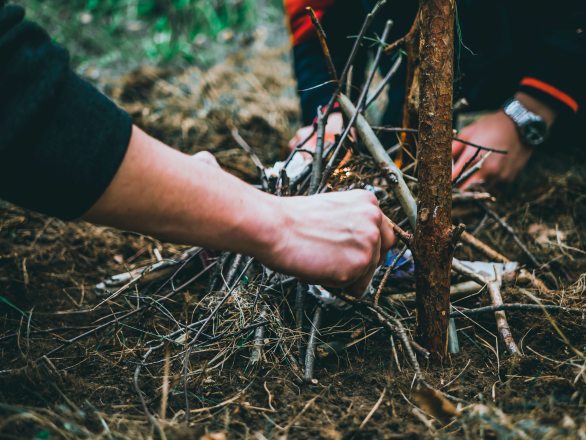
“The instinct in humans and animals to do things that will prevent them from dying” – this no frills dictionary definition of the word ‘survival’ tells it like it is. So does this basic instinct, that has served humankind so well for millennia, still work for us in the 21st century? Of course, the answer is yes, but in an adapted way to suit the far more complex and sophisticated world that we live in. Although the environment has changed beyond recognition from the fight or flight days of our ancestors, human needs for survival haven’t. They remain constant – shelter, food and water, and clothing to protect our bodies from extremes of temperature and other hazards. However, it only takes an unexpected event or accident to throw a person out of their comfort zone and into survival mode.

At the end of last year, I broke my right wrist on holiday in Finland. Now I know that you can’t blame everything on climate change, but it did have a role to play in this. Usually in November, northern Finland (Lapland) is covered in a thick layer of powdery snow. However, in the week before we arrived, due to unprecedented high daytime temperatures, the snow had melted and then frozen in the sub-zero temperatures at night, resulting in solid sheets of ice everywhere. The choice was simple, stay inside and not venture out at all, or put crampons on your boots and take your chances. I did the latter! On the plus side, I did get to see the aurora on four nights – which was spectacular.

So there I was in a foreign country, in arctic conditions, with my right arm plastered up to my elbow. My first reaction was to burst out crying in an unashamed wave of self pity. However, after I’d got over the initial shock of what had happened and taken a few industrial strength painkillers, my survival instinct began to kick in. I realised that I needed to think about the situation in a calm and methodical way.

Being right-handed, a considerable number of things that I had previously taken for granted became a real problem. Most of the clothes that I’d brought with me became obsolete straightaway, as I was unable to get the plaster through the cuffs. This included my duck down coat, essential for surviving the freezing temperatures. Preparing and cutting up my food was impossible, as I couldn’t apply any pressure on my wrist. Trying to do this one-handed doesn’t work, I tried it many times. You need a knife and fork to get this right. At least I had a cabin for shelter, but I couldn’t light a fire.

In short, if I’d been on my own, I would have had to return home. However, even that would have been far from straightforward, trying to negotiate my luggage, getting in and out of vehicles and doing all the travel-like things that are difficult even if you have all your limbs intact. Instead I decided to stay the course with the help of my husband.

I reverted back to toddlerhood. Buttons and zips were done up for me. My food was cut up into bite-size pieces, or else, in a fit of frustration, I’d pick it up with my left hand, even in restaurants, people making allowances for me, seeing my predicament. It was surprisingly liberating to be excused the usual table manners. As for my clothes, I sacrificed a number of items by splitting the right arm seam. Most important, I discovered that I could still get my coat done up if I pushed my hand up to, but not through, the cuff.

So I survived. Well, of course I did. However, the whole experience made me give more thought to those with permanent disabilities who have to face these challenges every day of their lives and to the large number of people who, even in the 21st century, struggle to gain access to even the basic survival needs.

The Future of Plastics

beverage-concrete-surface-drink-1146772

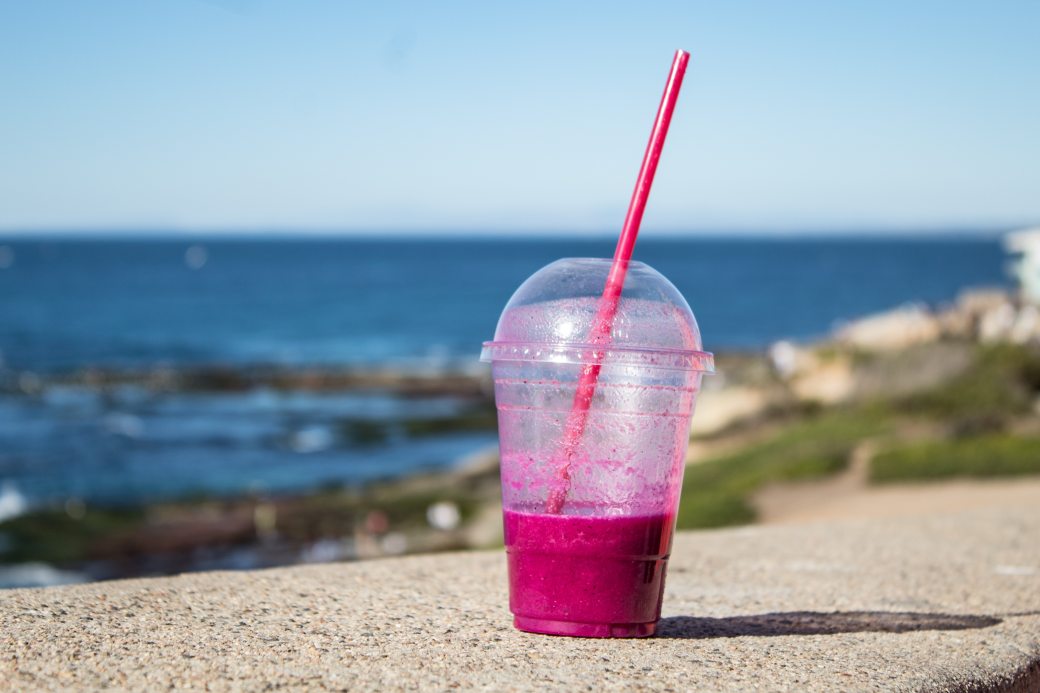
Ever since David Attenborough stared out at us from our TV screens at the end of the series Blue Planet II, his head at a slight angle, his expression patient but firm like a favourite uncle, and told us that we had to do something about plastic pollution in the world’s oceans before it was too late, we have taken his words to heart and set about trying to make a very complicated problem better. However, despite our good intentions, it’s not proving easy.

We’re all trying our best to recycle as much plastic as we can but, when it comes down to how much you’re able to achieve, it seems that we’re all up against a postcode lottery, due to a lack of uniformity operating in councils across the country. Some are excellent, recycling a large variety of plastic waste whilst, at the other end of the scale, a few offer only a very minimal service. Personally, I’ve got to the stage where I can’t bring myself to put any plastic into the general waste bin, so I sneak it all in the recycling hoping, perhaps naively, that something will be done with it.

There are plenty of volunteer groups who regularly remove plastic off our beaches, but it’s a never ending task – a drop in the ocean. It’s a cliché I know, but here it seems appropriate. It’s a soul-destroying activity, because the following week the shoreline will be covered in plastic waste again, as if you hadn’t done a thing. It doesn’t matter how enthusiastic you are, there’s only so many times you can do this without getting disheartened.

So what about something on a larger scale. A Dutch teenager called Boyan Slat was swimming in the sea in Greece and was appalled at what he saw there – more plastic than fish. He became an ardent campaigner determined to clean up our oceans and, in 2013, founded The Ocean Cleanup. Their plan is to deploy a fleet of long floating barriers to collect plastic in the eastern Pacific where it accumulates, trapped there by the circular currents and get rid of most of it by 2040. However, even this ambitious undertaking has it’s critics, with many making the point that, rather than spending time and money on this, we could be researching alternatives to plastic. But are there any viable, practical alternatives to plastic?

Surely the production of biodegradable plastics is the answer to the problem. Well, no, apparently not. A lot of plastics labelled ‘biodegradable’ will only break down in temperatures of 50C and that’s not going to be in the sea. They’re also not buoyant which means they sink so, as with landfill, they’re not exposed to the UV at all.

The Guardian newspaper recently decided to switch from its polythene wrappers, for its weekend supplements, to a compostable material made from potato starch. Sounds like a great idea, but feedback has suggested that the infrastructure is not always in place to support these initiatives and that some councils won’t accept them in food waste bins, as they clog up the mulching mechanisms.

It’s an interesting fact that the very first man-made plastic appeared in 1862 and was made from an organic material derived from cellulose that once heated could be moulded and retain its shape when cooled. It wasn’t until 1909 that the first completely synthetic plastic, Phenol-Formaldehyde, was invented with the trade name – Bakelite. Perhaps we should have stuck to the cellulose.

In a discussion with Prince William at the World Economic Forum, Davos, 2019, David Attenborough had this to say. “Every breath of air we take, every mouthful of food that we take, comes from the natural world. And if we damage the natural world, we damage ourselves.” With the sobering discovery of minute particles of plastic in drinking water across the world, perhaps it’s time for some joined up thinking, because we really need to get a move on now.
Milkman

Delivers in so many ways

Delivers in so many ways

I tend to come to things a little bit later than most. I didn’t get round to watching Game of Thrones until the end of series four. As for Breaking Bad, the whole thing was well over by the time I dipped into this brilliant piece of television. This explains why, four months after it was awarded the Man Booker Prize 2018, I have just read Milkman by Anna Burns. By distancing myself from all the hype surrounding the launch of things, I find that I approach them with fresh eyes, unaffected by others thoughts and opinions. This method does, however, have its pitfalls. There is a definite art to being a latecomer that involves the avoidance in the media, generally, and social media, in particular, of any references to interesting new films, TV programmes, books etc. that you think you might pick up on in the future. It’s possible, but not easy.

So when I started reading Milkman, all I knew about it was that it had a strange title; it was set in Northern Ireland; and was unanimously considered excellent by the Man Booker Prize judges. The novel is narrated by a girl of eighteen and is set in the late 1970’s during the Troubles. However, don’t expect any historical or political analysis or judgement because that’s not the remit of this book. This is the ‘norm’, the everyday life, for our unnamed heroine. She recounts extraordinary events in a matter-of-fact voice tinged, often, with a light touch of humour. The very first sentence sets the tone of this extraordinary novel. “The day Somebody McSomebody put a gun to my breast and called me a cat and threatened to shoot me was the same day the milkman died.” What an opening sentence!

However, it isn’t without its challenges and is quite unlike anything I’ve ever read before. It’s wasn’t the long chapters or sentences (some the length of a whole page); the minimal punctuation; the lack of paragraphs or the flow of consciousness narrative that surprised me. Although I have to admit that, in the past, I’ve given up on books that have had all, or some, of these features. What I hadn’t come across before are characters with no proper names, only denominations – like tablets girl, maybe-boyfriend, third brother-in-law, Somebody McSomebody and milkman. Some characters have more than one, like the narrator herself. The wee sisters were my favourite characters, all aged under ten and intellectual far beyond their years, who enjoy nothing more than a bit of philosophy or dipping into Thomas Hardy novels.

However, the mistake I made, from the start, was thinking that I knew exactly where the plot was going – young girl being stalked by older predatory male comes to a grisly end. Perhaps I’ve watched too many episodes of Silent Witness. So, early on, I was annoyed by the narrator’s habit of breaking off at key plot moments and taking off on long rambling and, apparently, unconnected outpourings. But be warned. Don’t even think about giving up on it at this stage. Before long, you realise that you have become totally invested in this girl’s life and predicament. The sense of place that she conjures up is so vibrant and realistic that you feel you are there beside her. You begin to be affected by the claustrophobic atmosphere, feeling trapped, with no escape from the prying eyes and caustic gossip of its inhabitants. You worry every time she sets foot out of her door. In short, you’re completely hooked.

So, yes, there’s no doubt that this book is a challenging read, but it’s well worth the journey.