The first New Year’s Resolution I’ve ever kept

background-celebration-champagne-714703.jpg

I’m very good at making New Year Resolutions, but not so good at keeping them. So when, in January 2019, I resolved to write a fortnightly blog for a year, I really didn’t think I’d do it. It’s particularly surprising that I managed to achieve this, since 2019 was a very challenging year for me and my family in so many ways. However the discipline of regular blog writing helped me to focus on something else for a while and turned out to be rather therapeutic. I wrote about the things that interest me, things that caught my eye and made me think and there were a lot of them – a mix of science and technology, the arts (in particular literature, cinema & television), space exploration and environmental issues. I steered well away from politics – for obvious reasons!

Pollution, and plastics in particular, featured a lot in my blog posts and not just on Earth, but in space too. I explored the idea of alternative realities after seeing the film Yesterday. I looked at the ways that we can change our diet to help the environment, including the eating of insects! The brilliant series Chernobyl prompted me to dwell on the alarming fact that very close to the date of the disaster I was involved with taking a school trip to Russia. Dystopia in popular culture and survival were also popular themes. So, if you should feel moved to, you can read all my blog posts by visiting my website.

The Babylonians were the first to celebrate the beginning of the New Year, although they chose late March, when new crops were planted. It was the Romans who established January 1 as the start of the year, placing the mythical king, Janus, at the head of the calendar. He became the ancient symbol of resolutions, one of his two faces looking back to the old year and his other looking forward into the future. Although the date for New Year’s Day is not the same in all cultures, it has traditionally become a time of celebration and for customs to ensure good luck in the coming year. And all cultures do it differently.

Here are three of my favourites. In Wales, at midnight, the back door is opened  and then shut to release the old year with all its baggage. Then at the twelfth stroke of the clock the front door is opened and the New Year welcomed in with all its luck. Let’s hope this one works for 2020! I might give it a try. Norwegians make rice pudding and hide one whole almond in it. The person who gets the nut is guaranteed wealth and good luck – assuming they haven’t choked on it. You can’t be too careful with nuts. However, my all time favourite tradition comes from Sicily, where good luck will be yours as long as you eat lasagne on New Year’s Day. Consume any other pasta and you’re going to be in for a very rocky year!

My New Year resolution for 2020 is not to make a New Year resolution. Instead, I’m going to go with the flow, whatever that brings. If it keeps on raining though, it could turn out to be a deluge. We’ll see. Happy New Year!
They’re nutritious and plentiful: that’s why insects could be the food of the future

close-up-photo-of-grasshopper-511069-e1576062582407.jpg

Entomophagy – the eating of insects

When Monty Python aired the sketch ‘Crunchy Frog’, inspired by the introduction of the Trade description Act of 1968, in which inspectors question the owner of the Whizzo Chocolate Company about the ingredients of his Quality Assortment, including the suspect confection ‘Cockroach Cluster’, they tapped into the taboo subject of eating insects, or entomophagy as it’s officially known. Later, shows like I’m a Celebrity Get Me Out of Here added the revulsion element to the proceedings with the eating of live insects in the bushtucker trials, discontinued in 2019, after complaints of cruelty from animal rights groups.

Apart from the accidental consumption of insects, which I like to refer to as the ‘slug in lettuce’ moments, it’s fair to say that people in the western world have not embraced the idea of eating insects as part of a nutritional diet. However, and this might come as a shock to some, we’re already eating insects on a regular basis and have been for years. A certain amount of ‘insect material’ is allowed in food, since it causes us no harm. I won’t go into what foods contain insect parts, but it is a pretty long list. The truth of the matter is this – insects have been eaten for thousands of years in many countries around the world and continue to be eaten, and enjoyed, by two billion people. And everyone’s just fine!

There are so many reasons why we should all be eating insects. With an ever growing population and the need to produce food to feed it, insects could be a sustainable, environmentally friendly solution to fighting world hunger in the future. Farming insects would have less of a carbon footprint than the farming of cattle, sheep, pigs and poultry and could provide developing countries with a viable form of agriculture, since insects can be bred in a lot of different climates, many of which are unsuitable for traditional farming.

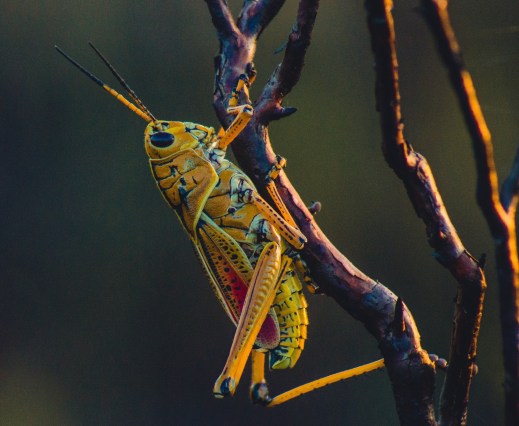
Then there’s the nutritional value of insects. They are packed full of protein, amino acids and antioxidants and are, not surprisingly, low in fat, making them a very healthy eating option. So what insects are edible? Well, there is a very large number, the most common being crickets; grasshoppers; mealworms (well, it’s in the name, isn’t it); scorpions and ants. This list is modest compared to the huge range of insects eaten on a daily basis in the developing world, including witchetty grubs, cicadas, giant water beetles and wasp eggs!

Sainsbury’s is the first supermarket in the UK to stock an insect food product, with the introduction in their snack range, of Eat Grub’s smoky BBQ crunchy roasted crickets! In addition, there are a growing number of restaurants that regularly include insects as part of their menus. One such establishment is Archipelago in London which has several insect based dishes on offer, including a dessert featuring chocolate-covered locusts. Not that far away from a Cockroach Cluster, I’d say. Monty Python as prophet. But we’re not laughing now!


Are we ready for driverless cars?

action-asphalt-blur-315934.jpg

Not yet!

I was surprised to read recently that trials for driverless cars, without a human on board, are already underway in London. The nearest I’ve got to a driverless car, since I don’t like using cruise control, is my recent conversion to Sat Nav. A bit late, I agree. And like all late converts, I wonder what I did before I started using it. I really don’t know. Well, yes, I do know. I got lost – a lot!

So the idea of simply climbing aboard a futuristic-looking car, setting my destination and letting the vehicle’s electronics do the rest, while I sit back with a gin and tonic and read a good book, is a very appealing concept, especially set against the stresses and frustration of modern day driving. However, trying to tack a hi-tech transport solution onto an inadequate infrastructure is only going to end one way – in more stress and frustration.

There are, of course, already semi-autonomous cars out there, that can control speed, steering and braking on the motorway and also have an automatic lane-changing feature, which sounds quite terrifying. The two features these cars possess that I’m very excited about are – the auto-park and “summon” functions.

I have always struggled with parallel parking, so a car that just gets on with it and parks in the trickiest of situations, with speed and accuracy, is a dream come true. Likewise the idea that you can summon your car to come and pick you up outside a supermarket, for example, without the embarrassment of wheeling a trolley round and round a car park because you’ve forgotten where you parked it. Not that I’ve ever done that …

The biggest benefit of all, though, has got to be the way that this pioneering technology could improve the lives of people with limited mobility, people who can’t drive themselves, or negotiate public transport, for whatever reason. It will give people struggling to get around, greater freedom, independence and a better quality of life.

But this is the future. To reach it, an awful lot of work has got to be done to sort out the numerous problems along the way.  Security is one of the biggest issues. In particular, the very real danger of cyber attacks on driverless cars that could lead to disastrous consequences. Research continues apace to try and find a solution to the threat of hacking.

In addition, the technology will create the need for a complete legal restructure before self-driving cars can become a reality. The big question is whether manufacturers or the ‘driver’ is liable in the event of an accident. As for car insurance, there will be a need for extended cover to protect motorists if the software in the autonomous vehicle malfunctions when they’re not in control.

Other questions arise about whether we will still need driving licences. The Highway Code will have to be changed to take into account actions that, for a human driver, would be considered dangerous but for autonomous cars would be the norm e.g. tailgating. A second driving licence may well be necessary in order to ensure that people are capable of taking over control in an emergency and haven’t become complacent, trusting the technology too much.

However, the biggest problem of all is that our current crumbling road infrastructure is nowhere near good enough to support driverless car technology. This includes everything from road markings, signage and damaged surfaces. What would an autonomous car make of rows and rows of potholes? Without a sound and well-maintained infrastructure, these cars are not going to function correctly, because they won’t be able to recognise the action triggers programmed into them. And what about adverse weather conditions? How will they cope with flooded roads?

So, given all the above issues, it’s not surprising that the current thinking is that it will take a decade or more for manufacturers and lawmakers to find the correct combination of technology and legislation to allow a vehicle without a direct driver oversight to appear on public roads. With that in mind, perhaps I will have to learn parallel parking, after all.


Right to repair?

broken mobile phone

R.I.P.

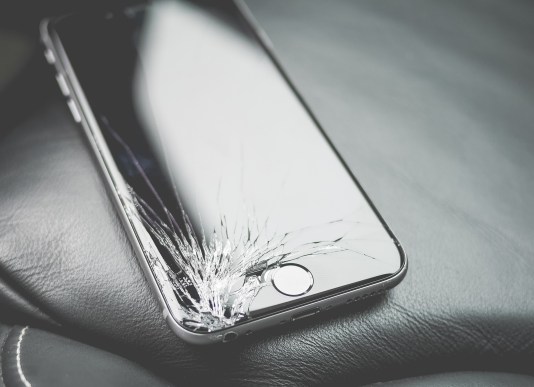
Recently, my mobile phone died on me only a few months before my free update was due. For a week, I tried to ignore the signs, the flickering screen; the way it flashed on and off; and then, the final stage, the fading of the display to pastel shades, making it appear as if its non-fast colours had been dipped in a strong detergent.

Then it happened. I switched it on the following morning and there was no display at all. I knew it was on, that they were there – the icons, the keypad, the apps, everything, alive beneath the blackness. But if you can’t see them, what can you do? It’s game over. So I made my way down to my local mobile phone shop. With misplaced optimism, I thought I’d ask about the possibility of a repair. I needn’t have bothered, the assistant’s blank stare gave me my answer before he’d uttered a word.

He pointed to the cracked screen, as if to verify his case. I explained that I had dropped it and damaged the screen in two places shortly after I got it, about fifteen months ago. I was surprised to be told that this was what was causing the current situation and that it had suffered a gradual deterioration since that happened. I felt the need to mention that it had been working perfectly alright until a few days ago. ‘That’s how it goes,’ he said, philosophically, as he led me towards the display of shiny new models. Apparently the only option I had open to me was to buy a new one. I didn’t have time to argue with him.

So my phone, like so many others before it, was destined to join the ever growing mountain of junk. It’s a sobering fact that each year Britons throw away two million tonnes of electronic waste alone and I was about to add to it. What’s more, I was being forced to buy a replacement, fuelling climate change from the greenhouse gases released in the manufacturing process. It seemed to me like the world had gone mad.

There is, though, a glimmer of hope on the horizon. The EU will be introducing legislation obliging manufacturers to make their products longer-lasting and easier to repair. The move has been hailed as a step in the right direction by consumer groups and environmental lobbyists. The new rules, signed off earlier this year, will come into force from April 2021 and will apply to household consumer products such as lighting, display screens, washing machines, dishwashers and fridges – but not, as yet, smaller electronic devices.

For that we may all need to turn to one of the many repair cafes that have sprung up in recent years, where volunteers help people repair their electronic items. However, in an ironic twist, the EU legislation is likely to be a threat to these very organisations since, repair professionals are set to retain the right to conduct most repair operations, with the new rules stating that producers will have to make most spare parts and repair manuals available for their use only.

Later back home, I placed my old phone, pronounced dead before its time, into the bottom drawer of my bedside table along with all my other ex-phones. It lay snug inside its leather wallet case, the one that doesn’t fit my new phone because the new model is a few millimetres narrower. Yes, I was forced to buy another case, even though my old one was still in excellent condition. Happy days!


Photo by picjumbo.com from Pexels

The Testaments by Margaret Atwood

The Testaments

History does not repeat itself, but it rhymes

Thirty-five years ago I read The Handmaid’s Tale by Margaret Atwood for the first time and it frightened the life out of me, as it did most of its female readers at the time. It portrayed a terrifying future where everything that women had fought for and achieved over centuries was taken away from them, almost overnight, with speed and brutality. I’d never read anything quite like it before.

It had a huge influence on my writing. I loved the incisive and yet lyrical quality of the prose. I liked the bravery of the ambiguous ending. I never felt the need to know exactly what happened to Offred; or to know all the answers to the many questions posed at the end of the novel. Ambiguity is unnerving. It keeps you on your toes. Like real life, sometimes you don’t get to know what happens.

I didn’t think I would, but I have thoroughly enjoyed the TV series and feel that it compliments, rather than detracts from the book it is based on. Every camera shot is a work of art. It’s like a series of Dutch genre paintings in an edgier alternative reality. Dystopia has never looked so stylish!

So it was with some trepidation that I heard that there would be a sequel to the Handmaid’s Tale after such a long time gap. I was in two minds whether to read it or not, like going back to a restaurant in which you’ve had an excellent meal, only to find that it’s been taken over by new owners and isn’t quite as good.

The Testaments follows three characters – Aunt Lydia, Daisy and Agnes – an established Aunt and well known to us from the Handmaid’s Tale, and two ‘trainee’ Aunts. The problem I had with it, right from the start, was that I found Daisy a very irritating character and this did spoil my enjoyment of the novel, since she occupies a third of it. I understand that she is supposed to be precocious having been raised in the decadent surroundings of Canada, but her dialogue grates and she descends into caricature in places. I found it almost impossible to work up any empathy towards her.

That aside, The Testaments does link very cleverly into the TV series and answers a lot of questions stemming from the original novel. But did they really need answering? I’m not sure they did. Its great strength, however, is that it provides a fascinating insight into the mind and motives of Aunt Lydia – a chilling study into the way that totalitarian societies lure ordinary folk onto a path of which they would never have felt capable.

Do I wish she hadn’t written it? No, I don’t. I really enjoyed it and feel it’s a worthy joint winner of the Booker Prize 2019. However, I do wish the judges had come to a proper decision and not copped out, leaving poor Bernardine Evaristo feeling like an ‘also ran’ at, what should have been, a defining moment of her career.

I still think that Atwood should have concentrated the whole novel on Aunt Lydia, such a great character, and left Daisy in Canada, which would also have served to sort out one of the less convincing plotlines in the novel. But there’s no getting away from it – Margaret Atwood is a class act and always has been.