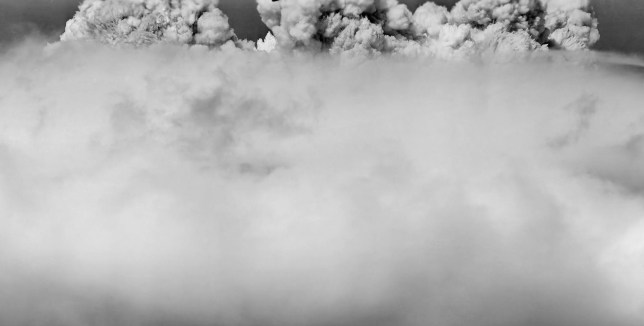
Chernobyl: a chilling reminder

atomic-bomb-beach-black-and-white-73909

How an HBO mini-series brought the horror back

Thirty-three years after it happened, it’s taken an HBO mini-series about the Chernobyl disaster to give a terrifying insight into what took place. The first episode was truly apocalyptic. I had to keep reminding myself that it was not a work of fiction – that this really happened. It was so tense, in places, that I found myself shouting at the tv screen – ‘Oh no, please don’t do that! You’re all going to die!’ By the end of the episode, I was in a state of complete nervous tension and there were still four more to go.

The thing is though, I don’t remember being that worried about it at the time. I was a lot younger and more naïve, yes, but I can’t help thinking that maybe it was because we were never told the full facts. Or, maybe, I trusted that everyone involved had it under control. However the brilliant cast, including Jared Harris, Stellan Skarsgard and Emily Watson, convincingly depict a situation in which nothing, whatsoever, was under control. The Soviet Union did not even admit that a reactor had exploded until nearly three days after, when radiation from the disaster set off alarms at a nuclear power plant in Sweden.

What made it even more chilling for me is that, two months before it happened, in February 1986, I was involved with taking a group of Dorset students to Russia. It was a cultural trip and the only danger we felt was present was that one of our group of teenagers would forget the lessons we’d given them on Russian etiquette and upset the locals. Or that they might get arrested for breaking one of the many incomprehensible rules that were present in public places and enforced by armed soldiers. If we’d had Risk Assessment forms in those days, I doubt that a level 7 nuclear disaster would have been on it. And yet Moscow, where we were based, is only 850 kms from Chernobyl – too close when you’re dealing with a cloud of toxic emissions.

Ukrainian officials estimate that the land round the Chernobyl Plant will not be safe for permanent human settlement for another 20,000 years. Whether this an accurate figure or not, we will never know, but if the human race survives that long it will be the year 22019 (I assume that is how the date will be written). To give some idea of how far into the future this is, it’s worth going back in history 20,000 years. Then the earth was in the grip of the Ice Ages. A few thousand individuals eaked out an existence living in tribes and mammoths were still around.

After the incident, a concrete sarcophagus was built around the destroyed reactors. It contains 100kg of plutonium, with a half life of 245,000 years. If that sarcophagus collapses, it will be enough to poison 100 million people. Perhaps this sobering fact was what made them decide, in 2017, to enclose Reactor No. 4 with a vast steel shelter designed to prevent radiation leaks from the site. It will be airtight for 100 years. But what happens after that …?
Survival: a basic instinct

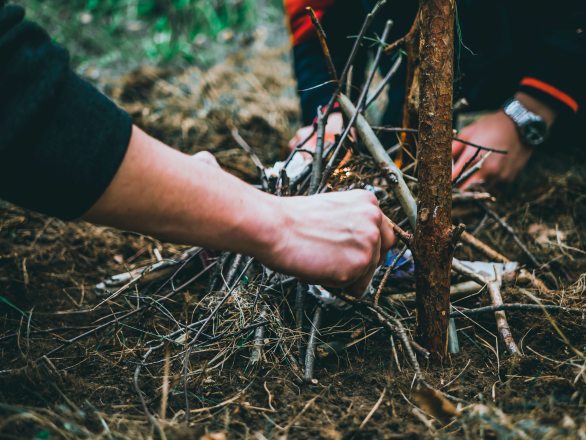
action-activity-adult-1174461

“The instinct in humans and animals to do things that will prevent them from dying” – this no frills dictionary definition of the word ‘survival’ tells it like it is. So does this basic instinct, that has served humankind so well for millennia, still work for us in the 21st century? Of course, the answer is yes, but in an adapted way to suit the far more complex and sophisticated world that we live in. Although the environment has changed beyond recognition from the fight or flight days of our ancestors, human needs for survival haven’t. They remain constant – shelter, food and water, and clothing to protect our bodies from extremes of temperature and other hazards. However, it only takes an unexpected event or accident to throw a person out of their comfort zone and into survival mode.

At the end of last year, I broke my right wrist on holiday in Finland. Now I know that you can’t blame everything on climate change, but it did have a role to play in this. Usually in November, northern Finland (Lapland) is covered in a thick layer of powdery snow. However, in the week before we arrived, due to unprecedented high daytime temperatures, the snow had melted and then frozen in the sub-zero temperatures at night, resulting in solid sheets of ice everywhere. The choice was simple, stay inside and not venture out at all, or put crampons on your boots and take your chances. I did the latter! On the plus side, I did get to see the aurora on four nights – which was spectacular.

So there I was in a foreign country, in arctic conditions, with my right arm plastered up to my elbow. My first reaction was to burst out crying in an unashamed wave of self pity. However, after I’d got over the initial shock of what had happened and taken a few industrial strength painkillers, my survival instinct began to kick in. I realised that I needed to think about the situation in a calm and methodical way.

Being right-handed, a considerable number of things that I had previously taken for granted became a real problem. Most of the clothes that I’d brought with me became obsolete straightaway, as I was unable to get the plaster through the cuffs. This included my duck down coat, essential for surviving the freezing temperatures. Preparing and cutting up my food was impossible, as I couldn’t apply any pressure on my wrist. Trying to do this one-handed doesn’t work, I tried it many times. You need a knife and fork to get this right. At least I had a cabin for shelter, but I couldn’t light a fire.

In short, if I’d been on my own, I would have had to return home. However, even that would have been far from straightforward, trying to negotiate my luggage, getting in and out of vehicles and doing all the travel-like things that are difficult even if you have all your limbs intact. Instead I decided to stay the course with the help of my husband.

I reverted back to toddlerhood. Buttons and zips were done up for me. My food was cut up into bite-size pieces, or else, in a fit of frustration, I’d pick it up with my left hand, even in restaurants, people making allowances for me, seeing my predicament. It was surprisingly liberating to be excused the usual table manners. As for my clothes, I sacrificed a number of items by splitting the right arm seam. Most important, I discovered that I could still get my coat done up if I pushed my hand up to, but not through, the cuff.

So I survived. Well, of course I did. However, the whole experience made me give more thought to those with permanent disabilities who have to face these challenges every day of their lives and to the large number of people who, even in the 21st century, struggle to gain access to even the basic survival needs.

The Future of Plastics

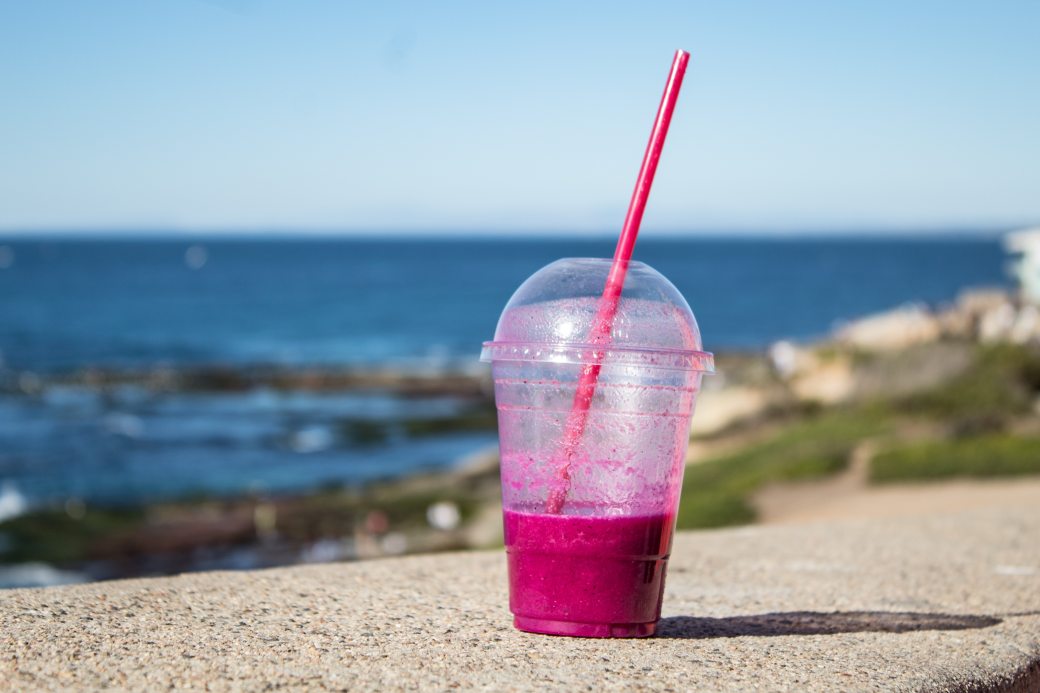
beverage-concrete-surface-drink-1146772

Ever since David Attenborough stared out at us from our TV screens at the end of the series Blue Planet II, his head at a slight angle, his expression patient but firm like a favourite uncle, and told us that we had to do something about plastic pollution in the world’s oceans before it was too late, we have taken his words to heart and set about trying to make a very complicated problem better. However, despite our good intentions, it’s not proving easy.

We’re all trying our best to recycle as much plastic as we can but, when it comes down to how much you’re able to achieve, it seems that we’re all up against a postcode lottery, due to a lack of uniformity operating in councils across the country. Some are excellent, recycling a large variety of plastic waste whilst, at the other end of the scale, a few offer only a very minimal service. Personally, I’ve got to the stage where I can’t bring myself to put any plastic into the general waste bin, so I sneak it all in the recycling hoping, perhaps naively, that something will be done with it.

There are plenty of volunteer groups who regularly remove plastic off our beaches, but it’s a never ending task – a drop in the ocean. It’s a cliché I know, but here it seems appropriate. It’s a soul-destroying activity, because the following week the shoreline will be covered in plastic waste again, as if you hadn’t done a thing. It doesn’t matter how enthusiastic you are, there’s only so many times you can do this without getting disheartened.

So what about something on a larger scale. A Dutch teenager called Boyan Slat was swimming in the sea in Greece and was appalled at what he saw there – more plastic than fish. He became an ardent campaigner determined to clean up our oceans and, in 2013, founded The Ocean Cleanup. Their plan is to deploy a fleet of long floating barriers to collect plastic in the eastern Pacific where it accumulates, trapped there by the circular currents and get rid of most of it by 2040. However, even this ambitious undertaking has it’s critics, with many making the point that, rather than spending time and money on this, we could be researching alternatives to plastic. But are there any viable, practical alternatives to plastic?

Surely the production of biodegradable plastics is the answer to the problem. Well, no, apparently not. A lot of plastics labelled ‘biodegradable’ will only break down in temperatures of 50C and that’s not going to be in the sea. They’re also not buoyant which means they sink so, as with landfill, they’re not exposed to the UV at all.

The Guardian newspaper recently decided to switch from its polythene wrappers, for its weekend supplements, to a compostable material made from potato starch. Sounds like a great idea, but feedback has suggested that the infrastructure is not always in place to support these initiatives and that some councils won’t accept them in food waste bins, as they clog up the mulching mechanisms.

It’s an interesting fact that the very first man-made plastic appeared in 1862 and was made from an organic material derived from cellulose that once heated could be moulded and retain its shape when cooled. It wasn’t until 1909 that the first completely synthetic plastic, Phenol-Formaldehyde, was invented with the trade name – Bakelite. Perhaps we should have stuck to the cellulose.

In a discussion with Prince William at the World Economic Forum, Davos, 2019, David Attenborough had this to say. “Every breath of air we take, every mouthful of food that we take, comes from the natural world. And if we damage the natural world, we damage ourselves.” With the sobering discovery of minute particles of plastic in drinking water across the world, perhaps it’s time for some joined up thinking, because we really need to get a move on now.