They’re nutritious and plentiful: that’s why insects could be the food of the future

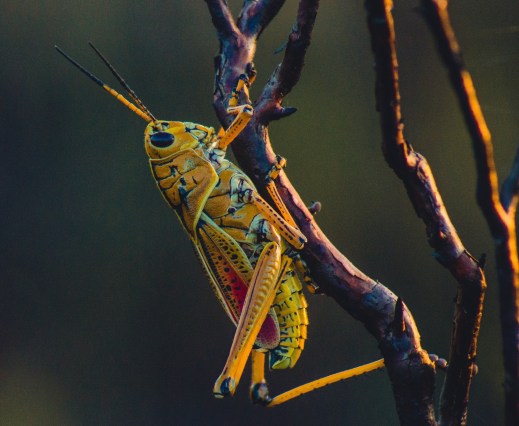
close-up-photo-of-grasshopper-511069-e1576062582407.jpg

Entomophagy – the eating of insects

When Monty Python aired the sketch ‘Crunchy Frog’, inspired by the introduction of the Trade description Act of 1968, in which inspectors question the owner of the Whizzo Chocolate Company about the ingredients of his Quality Assortment, including the suspect confection ‘Cockroach Cluster’, they tapped into the taboo subject of eating insects, or entomophagy as it’s officially known. Later, shows like I’m a Celebrity Get Me Out of Here added the revulsion element to the proceedings with the eating of live insects in the bushtucker trials, discontinued in 2019, after complaints of cruelty from animal rights groups.

Apart from the accidental consumption of insects, which I like to refer to as the ‘slug in lettuce’ moments, it’s fair to say that people in the western world have not embraced the idea of eating insects as part of a nutritional diet. However, and this might come as a shock to some, we’re already eating insects on a regular basis and have been for years. A certain amount of ‘insect material’ is allowed in food, since it causes us no harm. I won’t go into what foods contain insect parts, but it is a pretty long list. The truth of the matter is this – insects have been eaten for thousands of years in many countries around the world and continue to be eaten, and enjoyed, by two billion people. And everyone’s just fine!

There are so many reasons why we should all be eating insects. With an ever growing population and the need to produce food to feed it, insects could be a sustainable, environmentally friendly solution to fighting world hunger in the future. Farming insects would have less of a carbon footprint than the farming of cattle, sheep, pigs and poultry and could provide developing countries with a viable form of agriculture, since insects can be bred in a lot of different climates, many of which are unsuitable for traditional farming.

Then there’s the nutritional value of insects. They are packed full of protein, amino acids and antioxidants and are, not surprisingly, low in fat, making them a very healthy eating option. So what insects are edible? Well, there is a very large number, the most common being crickets; grasshoppers; mealworms (well, it’s in the name, isn’t it); scorpions and ants. This list is modest compared to the huge range of insects eaten on a daily basis in the developing world, including witchetty grubs, cicadas, giant water beetles and wasp eggs!

Sainsbury’s is the first supermarket in the UK to stock an insect food product, with the introduction in their snack range, of Eat Grub’s smoky BBQ crunchy roasted crickets! In addition, there are a growing number of restaurants that regularly include insects as part of their menus. One such establishment is Archipelago in London which has several insect based dishes on offer, including a dessert featuring chocolate-covered locusts. Not that far away from a Cockroach Cluster, I’d say. Monty Python as prophet. But we’re not laughing now!


Are we ready for driverless cars?

action-asphalt-blur-315934.jpg

Not yet!

I was surprised to read recently that trials for driverless cars, without a human on board, are already underway in London. The nearest I’ve got to a driverless car, since I don’t like using cruise control, is my recent conversion to Sat Nav. A bit late, I agree. And like all late converts, I wonder what I did before I started using it. I really don’t know. Well, yes, I do know. I got lost – a lot!

So the idea of simply climbing aboard a futuristic-looking car, setting my destination and letting the vehicle’s electronics do the rest, while I sit back with a gin and tonic and read a good book, is a very appealing concept, especially set against the stresses and frustration of modern day driving. However, trying to tack a hi-tech transport solution onto an inadequate infrastructure is only going to end one way – in more stress and frustration.

There are, of course, already semi-autonomous cars out there, that can control speed, steering and braking on the motorway and also have an automatic lane-changing feature, which sounds quite terrifying. The two features these cars possess that I’m very excited about are – the auto-park and “summon” functions.

I have always struggled with parallel parking, so a car that just gets on with it and parks in the trickiest of situations, with speed and accuracy, is a dream come true. Likewise the idea that you can summon your car to come and pick you up outside a supermarket, for example, without the embarrassment of wheeling a trolley round and round a car park because you’ve forgotten where you parked it. Not that I’ve ever done that …

The biggest benefit of all, though, has got to be the way that this pioneering technology could improve the lives of people with limited mobility, people who can’t drive themselves, or negotiate public transport, for whatever reason. It will give people struggling to get around, greater freedom, independence and a better quality of life.

But this is the future. To reach it, an awful lot of work has got to be done to sort out the numerous problems along the way.  Security is one of the biggest issues. In particular, the very real danger of cyber attacks on driverless cars that could lead to disastrous consequences. Research continues apace to try and find a solution to the threat of hacking.

In addition, the technology will create the need for a complete legal restructure before self-driving cars can become a reality. The big question is whether manufacturers or the ‘driver’ is liable in the event of an accident. As for car insurance, there will be a need for extended cover to protect motorists if the software in the autonomous vehicle malfunctions when they’re not in control.

Other questions arise about whether we will still need driving licences. The Highway Code will have to be changed to take into account actions that, for a human driver, would be considered dangerous but for autonomous cars would be the norm e.g. tailgating. A second driving licence may well be necessary in order to ensure that people are capable of taking over control in an emergency and haven’t become complacent, trusting the technology too much.

However, the biggest problem of all is that our current crumbling road infrastructure is nowhere near good enough to support driverless car technology. This includes everything from road markings, signage and damaged surfaces. What would an autonomous car make of rows and rows of potholes? Without a sound and well-maintained infrastructure, these cars are not going to function correctly, because they won’t be able to recognise the action triggers programmed into them. And what about adverse weather conditions? How will they cope with flooded roads?

So, given all the above issues, it’s not surprising that the current thinking is that it will take a decade or more for manufacturers and lawmakers to find the correct combination of technology and legislation to allow a vehicle without a direct driver oversight to appear on public roads. With that in mind, perhaps I will have to learn parallel parking, after all.


Space debris: how an astronaut’s discarded glove could cause havoc

astronaut-astronomy-cosmonaut-355956.jpg

Clearing up our rubbish

It seems that wherever humans go they will always leave behind their rubbish and space is no exception to this rather depressing fact. Over 60 years of space activity has resulted in a great deal of space debris being left behind to float aimlessly in orbit around the Earth.

Current estimates indicate that there are almost 130 million objects in space of various shapes and sizes, ranging in size from a few millimetres to many metres and they can all prove hazardous. Amongst it all is known to be a glove lost by astronaut Ed White on the first American space-walk back in 1965. Even something as tiny as a fleck of paint, too small to be tracked, has the potential, when travelling at speeds of up to 17,500 mph, to cause damage. A number of space shuttle windows have had to be replaced because of paint fleck damage. And that’s just the small stuff.

Over 900,000 objects are considered big enough to damage or completely destroy entire spacecraft should they be involved in a collision. Objects like old satellites, spent rocket stages and fragments caused by their disintegration and collisions. In 2009, a defunct Russian satellite collided with and destroyed a functioning U.S. commercial satellite. The collision caused an extra 2,000 pieces of trackable debris to be added to the existing inventory of space rubbish.

NASA has well-established rules for tracking and dealing with possible collisions with such objects, including the most major of these, the evacuation of a space station. Debris avoidance manoeuvres are planned according to the probability of collision and the impact to mission objectives and risk to the crew. Over the last 10 years several collision avoidance manoeuvres have been conducted.

However the problem is not going to go away, in fact it will only get worse as more and more bits of space junk are added to what’s already up there. The only answer is to get rid of it. And that’s exactly what a 100kg satellite called RemoveDebris UK has been doing, by trialling a number of technologies that could be used in the future to deal with the clear up of space debris. The tests, using a harpoon and nets, have been successful and could open the door to a solution to the problem.

Simon Fellowes, from the Surrey Space Centre and manager of the consortium behind RemoveDebris said this, “As a university, we’ve given proof of concept for the basic ideas; we’ve shown the technology-readiness has reached a certain level. It’s now for industry to turn these concepts into a commercial product or business.”

Let’s hope that someone heeds his words and takes action before the very real prospect of space tourism becomes the norm, because that amount of debris floating about on the space highways is an accident waiting to happen.


Wasps: what are they for?

wasps

Ruining the last days of summer or gardener’s friend?

The only person I’ve ever come across who has openly admitted to liking wasps is naturalist Chris Packham. When asked by a young person, “What are wasps for?”, he started his reply by saying – ‘I’m a great fan of wasps. I have a nest of them in my stables and they’re very happy; I’m very happy.’

However, anyone who has ever attempted to enjoy a cream tea, in the garden, on a sunny late summer afternoon, will understand why I simply can’t bring myself to agree with him. The minute you uncover that jam to put on your scone, be it in the Cornish or Devon way, it doesn’t matter, you are going to be plagued by wasps. Not just by one, but by many. No amount of flailing of arms, screaming, or swatting madly is going to deter those stripy little fiends from Hell from sinking their jaws into your strawberry conserve and ruining your day.

Meanwhile the bees, who we all love, of course, are going about their business concentrating their efforts on gathering nectar from the flowers in your garden, unconcerned by the open warfare, between wasp and human, going on behind them. It’s difficult not take it all personally. If bees can behave nicely, why can’t wasps? After all they are described as ‘social’ insects. Although what’s social about attacking and stinging people and building nests in the most inconvenient of places, like your shed or in the loft, I don’t know.

But the truth is that wasps are just being wasps and, contrary to what we might think, they do a lot of good in the garden. For a start, even though their bodies are smoother than the hairy bees, they carry out a useful amount of pollination. As insect predators, wasps spend their summer’s preying on the aphids, flies, caterpillars and other creepy crawlies that would otherwise be chomping their way through your plants.

Despite their reputation, wasps are not unduly aggressive. However if you’re swatting at them, or trying to destroy their beautifully intricate nests that they’ve spent a good deal of time constructing, they are going to interpret your actions as antagonistic.  And, as we all know, they will defend themselves, working together to attack the enemy. It’s all going to end in tears.

So why are they honing in on our sweet treats? The reason is that wasp larvae convert the protein from the insects they’re fed into a sweet liquid which the worker wasps drink. In late summer, when the larvae have fully grown, the adult wasps need to search out alternative sugary substances for fuel. And your cream tea fits the bill very well indeed.

If they could, perhaps wasps might well ask what humans are for. Interesting thought. What biological purpose do we serve on planet Earth? Fortunately, wasps aren’t known for their philosophical thinking, so we don’t, for now, need to come up with an answer. Just as well, as I can’t think of one, for the moment.