How seeing the film Yesterday got me thinking about parallel universes and all that

astronomy-constellation-cosmos-2162.jpg

Infinity and beyond

Recently I went to see the film Yesterday and thoroughly enjoyed it. If you don’t know the premise of this film it goes like this. A struggling singer/songwriter, Jack Malik, is astounded to discover that he is apparently the only person on Earth who can remember the Beatles and their music, after he wakes up in an alternative reality where they never existed, following a worldwide blackout. However something was puzzling me as I walked home. The fact that most other things in Jack’s life remain the same made me feel that the whole thing was a bit far fetched. That was until I started looking into the concept of infinity.

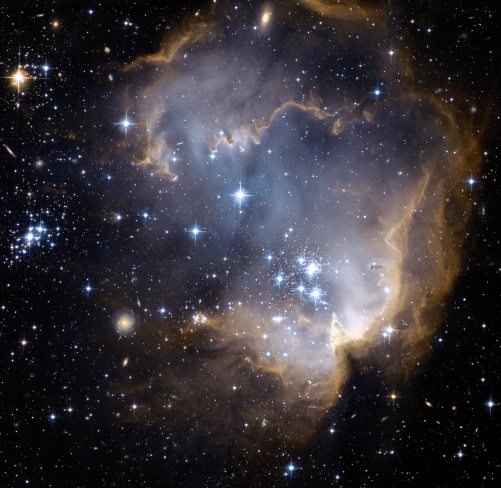
If you accept the idea of infinity, then parallel universes, alternate realities, or a “multiverse”, whatever name you choose to use, must exist. In other words there’s a universe out there for every outcome that is conceivable. This made the film’s plot a lot more feasible. The multiverse, a theory that a few decades ago would have been relegated to the very fringe of theoretical physics has now become quite mainstream in the world of science. This doesn’t make it any less mind-boggling.

However, the fact that Jack manages to slip into a parallel universe might still be a step too far. But, again, if you believe in infinity then Jack, and all of us for that matter, may be living in a universe that allows you to cross into other universes. Anything’s possible. And so it goes on and on and on – ad infinitum.

I was surprised to discover that there are many stories that claim to be proof of the existence of alternative realities. My favourite, because it’s such a great tale, is that of Taured Man. In the summer of 1954, a neatly-dressed, middle-aged man arrived at Tokyo International Airport. He was asked his country of origin and replied that he was from Taured. The officials told him this country did not exist. The man then proceeded to show them his passport, complete with legitimate visa stamps and a driving licence, both issued in Taured. Needing to investigate the issue further, he was sent to a hotel accompanied by two immigration officers who stood outside his hotel room, fifteen stories up, all night. In the morning he had completely disappeared. He was never seen again. Whether this was just an elaborate hoax, or proof of parallel universes, we’ll never know.

I have to confess that, lately, when I watch the news, I feel like I might have drifted into an alternative reality; or else I wish that I could! This, though, is defeatist talk. Unless there is a way to get from one universe to another, we’re stuck in the one we’ve got – warts and all. Looking on the bright side, infinity dictates that there is no other universe that has the exact version of us in it – we’re all unique. So we need to make the best choices we can, because our future in this universe is the only one we’re going to get. Unless …


Photo by Pixabay
Drones: six ways they are set to help us in the very near future

camera-drone-flight-2100075.jpg

Making life better

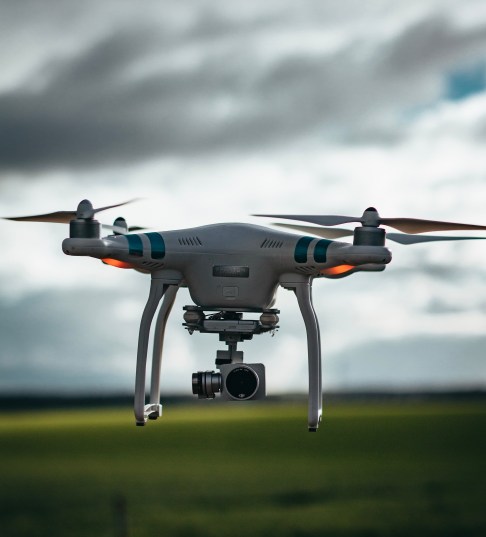
Over the last few decades, the development of drone technology has been increasing apace and they are set to become an indispensable part of all areas of our lives in the future. However, drones have had a ‘bad press’ lately, with stories about disruption at airports, covert surveillance, remote bombing operations and terrorist attacks. New uses for drones are emerging all the time. Here are six positive applications that are being developed around the world that could help perform routine tasks more effectively; benefit the planet; and most importantly save lives.

Transporting life-saving organs and medical supplies

It’s safe to say that, when it comes to getting organs and medical supplies to where they’re needed, time is of the essence and can make the difference between life and death. An alarming number of donated organs are thrown away each year because they can’t be got to the patient fast enough to be used. Although in its infancy, there have already been many examples of successful medical drone delivery. This method will speed things up dramatically, flying organs and other medical supplies directly from donor to hospital.

Fighting fires

It will take about 20 years to restore the Notre Dame cathedral to its former glory, after the fire on 15th April caused significant damage, but it could have been a lot worse were it not for the tireless work of a team of brave firefighters that tackled the blaze. What is not widely known is that robots and drones were used to help fight the fire. An unmanned, remotely controlled vehicle called Colossus, a water-firing tank-like robot, equipped with cameras, gave firefighters a view of areas too dangerous for humans to enter. In addition, a drone provided aerial reconnaissance and thermal imagery, giving valuable information about the spread of the fire to those on the ground.

Barking drones to replace sheepdogs

A New Zealand company called Ferntech is bringing drone technology to the agricultural arena by using it to help farmers with “… jobs that are dirty, dangerous or just plain dull.” Using a drone modified by the addition of a siren that allows audio recording and playback, they have created a ‘barking’ drone that helps to herd large groups of animals across fields and hillsides. However the traditional sheepdog, complete with fur and wagging tail, will not be made redundant, as farmer and dog will be able to oversee proceedings at a safe distance and away from the hazards involved with moving a lot of animals.

Tracking sharks near popular beaches

We’ve all seen the film Jaws and the panic that the sight of a triangular fin poking from the surface of the sea can create. Most of the time sharks spotted off the coast are harmless to humans and are just there to feast on schools of fish. But what if they’re not! Swimmers, surfers and other water sports enthusiasts will be pleased to hear that there are many surveillance companies currently developing drones specifically to track shark movements from the air, patrolling shorelines and keeping our beaches safe.

Tree-planting with missiles

With the Earth’s natural forests disappearing at an alarming rate, I was very interested to come across this exciting use of drones. Last year a company called Biocarbon Engineering planted thousands of mangroves in a remote field in Myanmar, by firing missiles from a drone into the soil, complete with biodegradable pods containing germinated seeds and nutrients. The company’s co-founder, Irina Fedorenko, said that “We are now ready to scale up our planting and replicate this success.” It is estimated that two workers operating a fleet of ten drones could plant up to 400,000 trees by this method each day. Very impressive!

Search and rescue

When people get lost in remote areas, it becomes difficult and dangerous for the search and rescue services to find them in time. Dense tree cover makes this task almost impossible. The Massachusetts Institute of Technology has been researching and developing a system that replaces humans with a fleet of drones to make the ‘search’ part of the operation far more efficient. The drones would fly in pre-set GPS paths over large forest areas communicating their position and scan results with a ground station. The ability to scan through thick vegetation and heavy tree cover makes drones ideal for this sort of operation. Recent trials have been highly successful and it shouldn’t be too long before drones and the technology behind them will be saving lives.


Photo by Flo Dnd from Pexels


Astrological chaos: did our zodiac signs change or not?

astrology-astronomy-blur-159670.jpg

Astrology versus Astronomy

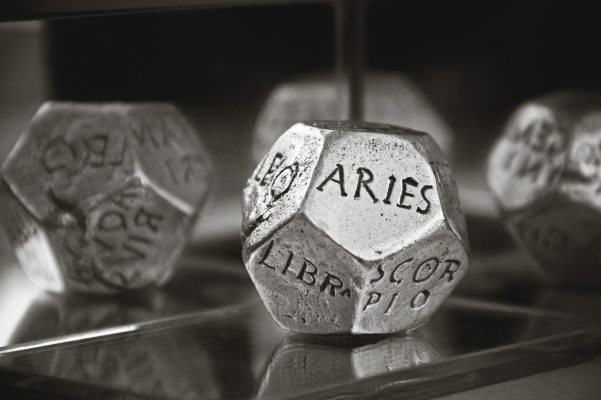
In 2016 NASA dropped a bombshell informing the world that instead of 12 zodiac signs there were, in fact, 13 and that what we had always thought were our star signs were no longer correct. Then, showing a complete lack of empathy for those who felt that their lives had been turned upside down by this revelation, they stated – “Here at NASA, we study astronomy, not astrology. We didn’t change any zodiac signs, we just did the math.” The name of the new star sign was Ophiuchus.

Unfortunately, being NASA, their argument was pretty watertight. When the ancient Babylonians created the zodiac about 3,000 years ago they wanted it to correspond with star constellations. However there was a snag. They were working with a 12 month calendar, but there were 13 constellations. So one had to go. At least they made the correct choice and ditched the one with the most unpromising name.

There was also the small matter of the Earth’s axis which NASA argued doesn’t point in the same direction as it did back then and therefore all the signs have different date ranges now.

So here they are, the zodiac signs and dates according to NASA:

Capricorn:   Jan. 20 to Feb. 16   Aquarius:   Feb.16 to March 11

Pisces:   March 11 to April 18   Aries:   April 18 to May 13

Taurus:   May 13 to June 21   Gemini:   June 21 to July 20

Cancer:   July 20 to Aug. 10   Leo:   Aug. 10 to Sept. 16

Virgo:   Sept. 16 to Oct. 30   Libra:   Oct. 30 to Nov. 23

Scorpio:   Nov. 23 to Nov. 29   Ophiuchus:   Nov. 29 to Dec. 17

Sagittarius:   Dec. 17 to Jan. 20

Needless to say, the astrology world wasn’t having any of this. Ignoring the criticism that astrology is a pseudoscience, they made their case and agreed that NASA was right that Ophiuchus does exist as a constellation, but argued that the constellations are not the same as signs. The Tropical Zodiac is not meant to be aligned with the constellations, so therefore the astrologers never had it wrong. The zodiac signs are based around the Earth’s relationship to our own Sun, not alignments with other Stars (Suns). For example: someone born on May 31st would be a Gemini (Sun sign), but their Sun would be aligned with the star Aldebaran in the constellation of Taurus.

OK, so I’m no longer a dependable, realistic and determined Capricorn. According to the new signs, I’m now Sagittarius, cheerful, optimistic and energetic. This doesn’t sound like me, at all. At least I’m not Ophiuchus. It was a close call though, because I only missed that fate by one day.

Not that I believe in any of it, but I know that NASA’s not right. A Capricorn woman tends to be very stubborn. She believes that her judgments and decisions are always right, thus changing her viewpoint is next to impossible. So, with that in mind, I am still a Capricorn and I ain’t budging!

How changing your diet could help the environment

beef-cooking-delicious-769289 (1)

What’s your food’s carbon footprint?

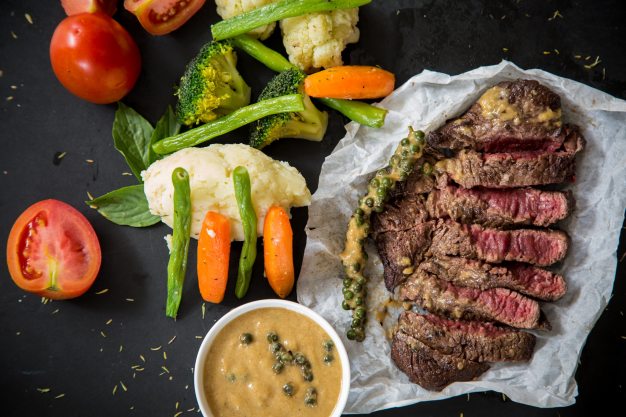
Lately I’ve been thinking about how to make my diet more environmentally friendly. Food production is responsible for a quarter of all greenhouse gas emissions that contribute to global warming, according to a University of Oxford study. There’s a great deal of information around at the moment about the impact that different foods have on the environment, but one thing’s for sure and that is that meat and other animal products are the main culprits, making up more than half of that figure. That’s why I’ve cut down my meat consumption to once a week and taken a very small step in the right direction.

However, the conclusion that most research comes to is that if we’re serious about reducing global warming, then we all need to become vegan. I strongly believe that this is true and that if the human race survives the consequences of all the environmental devastation we’ve created, then in the future we will all be eating plant-based foods. But like a lot of people, I don’t think that I can make this dietary transition in one step.

So, using the Climate Change Food Calculator (BBC News), I have tried to work out how I could do it in stages, looking at proteins to start with. Now, the calculator is simple and does not include all foodstuffs but it gives you a very good idea of how proteins compare on the ‘environmentally unfriendly’ scale. Beef is at the top of that scale. If you ate a 75g portion of beef 1-2 times a week, over an entire year, your consumption of beef contributes 604kg to your annual greenhouse gas emissions. In plain speak that is equivalent to driving a regular petrol car 1,542 miles; or heating an average UK home for 95 days; or 1 return flight from London to Malaga.

OK, so meat’s not good. What about fish, then? The calculator only gives you the option of farmed fish. Eating 140g (one cod fillet) 1-2 times a week over a year would result in a figure of 146kg per annum. That’s 373 miles by car and 23 days heating. But, whatever you do, don’t get on that plane, because you’re not going to get to Malaga. Interestingly, pork is only just below fish on the scale, with chicken quite a bit lot lower. I wasn’t expecting that. So if you can’t give up meat completely, then chicken is the option to go for.

Dairy foods are next, in particular – cheese. I love cheese, in all its varieties, so it was with a great deal of trepidation that I put it into the calculator. A 30g serving of cheese (that’s not much!) 1-2 times a week results in a figure of 75kg of greenhouse gas emissions; or 193 miles by car; or 11 days of heating. The amount of cheese I eat in a week is going to bump that figure up a huge amount. Something will have to be done here!

The most environmentally friendly protein is not beans; and it’s not tofu, which is a relief because, although I’ve never tried it, curdled soymilk pressed into cubes with coagulants doesn’t sound too appetising to me. It is, in fact, nuts. One handful of nuts, 1-2 times a week results in 1.1kg of greenhouse gas emissions which, over a year, equates to 3 miles by car; or 0.2 days of heating.


Photo by Malidate Van from Pexel

Chernobyl: a chilling reminder

atomic-bomb-beach-black-and-white-73909

How an HBO mini-series brought the horror back

Thirty-three years after it happened, it’s taken an HBO mini-series about the Chernobyl disaster to give a terrifying insight into what took place. The first episode was truly apocalyptic. I had to keep reminding myself that it was not a work of fiction – that this really happened. It was so tense, in places, that I found myself shouting at the tv screen – ‘Oh no, please don’t do that! You’re all going to die!’ By the end of the episode, I was in a state of complete nervous tension and there were still four more to go.

The thing is though, I don’t remember being that worried about it at the time. I was a lot younger and more naïve, yes, but I can’t help thinking that maybe it was because we were never told the full facts. Or, maybe, I trusted that everyone involved had it under control. However the brilliant cast, including Jared Harris, Stellan Skarsgard and Emily Watson, convincingly depict a situation in which nothing, whatsoever, was under control. The Soviet Union did not even admit that a reactor had exploded until nearly three days after, when radiation from the disaster set off alarms at a nuclear power plant in Sweden.

What made it even more chilling for me is that, two months before it happened, in February 1986, I was involved with taking a group of Dorset students to Russia. It was a cultural trip and the only danger we felt was present was that one of our group of teenagers would forget the lessons we’d given them on Russian etiquette and upset the locals. Or that they might get arrested for breaking one of the many incomprehensible rules that were present in public places and enforced by armed soldiers. If we’d had Risk Assessment forms in those days, I doubt that a level 7 nuclear disaster would have been on it. And yet Moscow, where we were based, is only 850 kms from Chernobyl – too close when you’re dealing with a cloud of toxic emissions.

Ukrainian officials estimate that the land round the Chernobyl Plant will not be safe for permanent human settlement for another 20,000 years. Whether this an accurate figure or not, we will never know, but if the human race survives that long it will be the year 22019 (I assume that is how the date will be written). To give some idea of how far into the future this is, it’s worth going back in history 20,000 years. Then the earth was in the grip of the Ice Ages. A few thousand individuals eaked out an existence living in tribes and mammoths were still around.

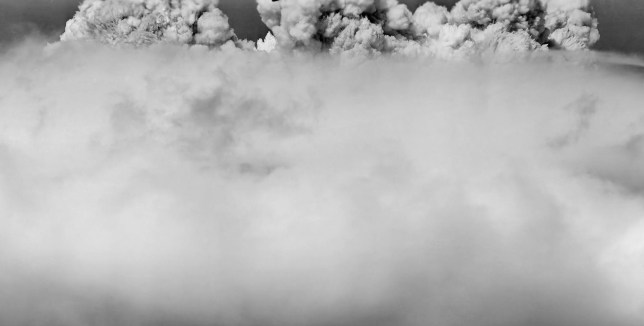
After the incident, a concrete sarcophagus was built around the destroyed reactors. It contains 100kg of plutonium, with a half life of 245,000 years. If that sarcophagus collapses, it will be enough to poison 100 million people. Perhaps this sobering fact was what made them decide, in 2017, to enclose Reactor No. 4 with a vast steel shelter designed to prevent radiation leaks from the site. It will be airtight for 100 years. But what happens after that …?