The first New Year’s Resolution I’ve ever kept

background-celebration-champagne-714703.jpg

I’m very good at making New Year Resolutions, but not so good at keeping them. So when, in January 2019, I resolved to write a fortnightly blog for a year, I really didn’t think I’d do it. It’s particularly surprising that I managed to achieve this, since 2019 was a very challenging year for me and my family in so many ways. However the discipline of regular blog writing helped me to focus on something else for a while and turned out to be rather therapeutic. I wrote about the things that interest me, things that caught my eye and made me think and there were a lot of them – a mix of science and technology, the arts (in particular literature, cinema & television), space exploration and environmental issues. I steered well away from politics – for obvious reasons!

Pollution, and plastics in particular, featured a lot in my blog posts and not just on Earth, but in space too. I explored the idea of alternative realities after seeing the film Yesterday. I looked at the ways that we can change our diet to help the environment, including the eating of insects! The brilliant series Chernobyl prompted me to dwell on the alarming fact that very close to the date of the disaster I was involved with taking a school trip to Russia. Dystopia in popular culture and survival were also popular themes. So, if you should feel moved to, you can read all my blog posts by visiting my website.

The Babylonians were the first to celebrate the beginning of the New Year, although they chose late March, when new crops were planted. It was the Romans who established January 1 as the start of the year, placing the mythical king, Janus, at the head of the calendar. He became the ancient symbol of resolutions, one of his two faces looking back to the old year and his other looking forward into the future. Although the date for New Year’s Day is not the same in all cultures, it has traditionally become a time of celebration and for customs to ensure good luck in the coming year. And all cultures do it differently.

Here are three of my favourites. In Wales, at midnight, the back door is opened  and then shut to release the old year with all its baggage. Then at the twelfth stroke of the clock the front door is opened and the New Year welcomed in with all its luck. Let’s hope this one works for 2020! I might give it a try. Norwegians make rice pudding and hide one whole almond in it. The person who gets the nut is guaranteed wealth and good luck – assuming they haven’t choked on it. You can’t be too careful with nuts. However, my all time favourite tradition comes from Sicily, where good luck will be yours as long as you eat lasagne on New Year’s Day. Consume any other pasta and you’re going to be in for a very rocky year!

My New Year resolution for 2020 is not to make a New Year resolution. Instead, I’m going to go with the flow, whatever that brings. If it keeps on raining though, it could turn out to be a deluge. We’ll see. Happy New Year!
Right to repair?

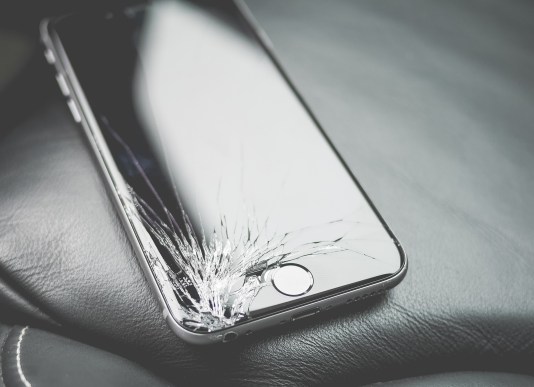
broken mobile phone

R.I.P.

Recently, my mobile phone died on me only a few months before my free update was due. For a week, I tried to ignore the signs, the flickering screen; the way it flashed on and off; and then, the final stage, the fading of the display to pastel shades, making it appear as if its non-fast colours had been dipped in a strong detergent.

Then it happened. I switched it on the following morning and there was no display at all. I knew it was on, that they were there – the icons, the keypad, the apps, everything, alive beneath the blackness. But if you can’t see them, what can you do? It’s game over. So I made my way down to my local mobile phone shop. With misplaced optimism, I thought I’d ask about the possibility of a repair. I needn’t have bothered, the assistant’s blank stare gave me my answer before he’d uttered a word.

He pointed to the cracked screen, as if to verify his case. I explained that I had dropped it and damaged the screen in two places shortly after I got it, about fifteen months ago. I was surprised to be told that this was what was causing the current situation and that it had suffered a gradual deterioration since that happened. I felt the need to mention that it had been working perfectly alright until a few days ago. ‘That’s how it goes,’ he said, philosophically, as he led me towards the display of shiny new models. Apparently the only option I had open to me was to buy a new one. I didn’t have time to argue with him.

So my phone, like so many others before it, was destined to join the ever growing mountain of junk. It’s a sobering fact that each year Britons throw away two million tonnes of electronic waste alone and I was about to add to it. What’s more, I was being forced to buy a replacement, fuelling climate change from the greenhouse gases released in the manufacturing process. It seemed to me like the world had gone mad.

There is, though, a glimmer of hope on the horizon. The EU will be introducing legislation obliging manufacturers to make their products longer-lasting and easier to repair. The move has been hailed as a step in the right direction by consumer groups and environmental lobbyists. The new rules, signed off earlier this year, will come into force from April 2021 and will apply to household consumer products such as lighting, display screens, washing machines, dishwashers and fridges – but not, as yet, smaller electronic devices.

For that we may all need to turn to one of the many repair cafes that have sprung up in recent years, where volunteers help people repair their electronic items. However, in an ironic twist, the EU legislation is likely to be a threat to these very organisations since, repair professionals are set to retain the right to conduct most repair operations, with the new rules stating that producers will have to make most spare parts and repair manuals available for their use only.

Later back home, I placed my old phone, pronounced dead before its time, into the bottom drawer of my bedside table along with all my other ex-phones. It lay snug inside its leather wallet case, the one that doesn’t fit my new phone because the new model is a few millimetres narrower. Yes, I was forced to buy another case, even though my old one was still in excellent condition. Happy days!


Photo by picjumbo.com from Pexels

The Testaments by Margaret Atwood

The Testaments

History does not repeat itself, but it rhymes

Thirty-five years ago I read The Handmaid’s Tale by Margaret Atwood for the first time and it frightened the life out of me, as it did most of its female readers at the time. It portrayed a terrifying future where everything that women had fought for and achieved over centuries was taken away from them, almost overnight, with speed and brutality. I’d never read anything quite like it before.

It had a huge influence on my writing. I loved the incisive and yet lyrical quality of the prose. I liked the bravery of the ambiguous ending. I never felt the need to know exactly what happened to Offred; or to know all the answers to the many questions posed at the end of the novel. Ambiguity is unnerving. It keeps you on your toes. Like real life, sometimes you don’t get to know what happens.

I didn’t think I would, but I have thoroughly enjoyed the TV series and feel that it compliments, rather than detracts from the book it is based on. Every camera shot is a work of art. It’s like a series of Dutch genre paintings in an edgier alternative reality. Dystopia has never looked so stylish!

So it was with some trepidation that I heard that there would be a sequel to the Handmaid’s Tale after such a long time gap. I was in two minds whether to read it or not, like going back to a restaurant in which you’ve had an excellent meal, only to find that it’s been taken over by new owners and isn’t quite as good.

The Testaments follows three characters – Aunt Lydia, Daisy and Agnes – an established Aunt and well known to us from the Handmaid’s Tale, and two ‘trainee’ Aunts. The problem I had with it, right from the start, was that I found Daisy a very irritating character and this did spoil my enjoyment of the novel, since she occupies a third of it. I understand that she is supposed to be precocious having been raised in the decadent surroundings of Canada, but her dialogue grates and she descends into caricature in places. I found it almost impossible to work up any empathy towards her.

That aside, The Testaments does link very cleverly into the TV series and answers a lot of questions stemming from the original novel. But did they really need answering? I’m not sure they did. Its great strength, however, is that it provides a fascinating insight into the mind and motives of Aunt Lydia – a chilling study into the way that totalitarian societies lure ordinary folk onto a path of which they would never have felt capable.

Do I wish she hadn’t written it? No, I don’t. I really enjoyed it and feel it’s a worthy joint winner of the Booker Prize 2019. However, I do wish the judges had come to a proper decision and not copped out, leaving poor Bernardine Evaristo feeling like an ‘also ran’ at, what should have been, a defining moment of her career.

I still think that Atwood should have concentrated the whole novel on Aunt Lydia, such a great character, and left Daisy in Canada, which would also have served to sort out one of the less convincing plotlines in the novel. But there’s no getting away from it – Margaret Atwood is a class act and always has been.


Drones: six ways they are set to help us in the very near future

camera-drone-flight-2100075.jpg

Making life better

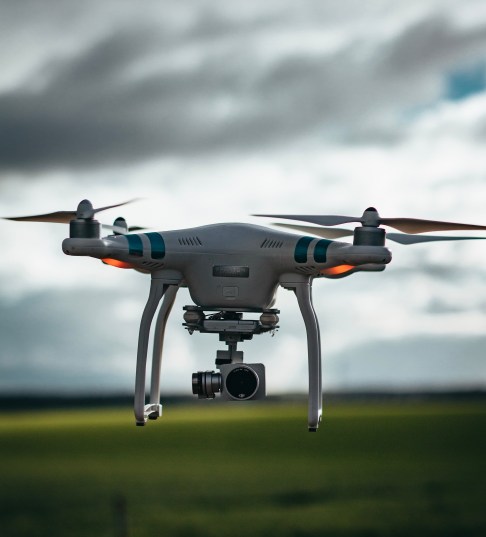
Over the last few decades, the development of drone technology has been increasing apace and they are set to become an indispensable part of all areas of our lives in the future. However, drones have had a ‘bad press’ lately, with stories about disruption at airports, covert surveillance, remote bombing operations and terrorist attacks. New uses for drones are emerging all the time. Here are six positive applications that are being developed around the world that could help perform routine tasks more effectively; benefit the planet; and most importantly save lives.

Transporting life-saving organs and medical supplies

It’s safe to say that, when it comes to getting organs and medical supplies to where they’re needed, time is of the essence and can make the difference between life and death. An alarming number of donated organs are thrown away each year because they can’t be got to the patient fast enough to be used. Although in its infancy, there have already been many examples of successful medical drone delivery. This method will speed things up dramatically, flying organs and other medical supplies directly from donor to hospital.

Fighting fires

It will take about 20 years to restore the Notre Dame cathedral to its former glory, after the fire on 15th April caused significant damage, but it could have been a lot worse were it not for the tireless work of a team of brave firefighters that tackled the blaze. What is not widely known is that robots and drones were used to help fight the fire. An unmanned, remotely controlled vehicle called Colossus, a water-firing tank-like robot, equipped with cameras, gave firefighters a view of areas too dangerous for humans to enter. In addition, a drone provided aerial reconnaissance and thermal imagery, giving valuable information about the spread of the fire to those on the ground.

Barking drones to replace sheepdogs

A New Zealand company called Ferntech is bringing drone technology to the agricultural arena by using it to help farmers with “… jobs that are dirty, dangerous or just plain dull.” Using a drone modified by the addition of a siren that allows audio recording and playback, they have created a ‘barking’ drone that helps to herd large groups of animals across fields and hillsides. However the traditional sheepdog, complete with fur and wagging tail, will not be made redundant, as farmer and dog will be able to oversee proceedings at a safe distance and away from the hazards involved with moving a lot of animals.

Tracking sharks near popular beaches

We’ve all seen the film Jaws and the panic that the sight of a triangular fin poking from the surface of the sea can create. Most of the time sharks spotted off the coast are harmless to humans and are just there to feast on schools of fish. But what if they’re not! Swimmers, surfers and other water sports enthusiasts will be pleased to hear that there are many surveillance companies currently developing drones specifically to track shark movements from the air, patrolling shorelines and keeping our beaches safe.

Tree-planting with missiles

With the Earth’s natural forests disappearing at an alarming rate, I was very interested to come across this exciting use of drones. Last year a company called Biocarbon Engineering planted thousands of mangroves in a remote field in Myanmar, by firing missiles from a drone into the soil, complete with biodegradable pods containing germinated seeds and nutrients. The company’s co-founder, Irina Fedorenko, said that “We are now ready to scale up our planting and replicate this success.” It is estimated that two workers operating a fleet of ten drones could plant up to 400,000 trees by this method each day. Very impressive!

Search and rescue

When people get lost in remote areas, it becomes difficult and dangerous for the search and rescue services to find them in time. Dense tree cover makes this task almost impossible. The Massachusetts Institute of Technology has been researching and developing a system that replaces humans with a fleet of drones to make the ‘search’ part of the operation far more efficient. The drones would fly in pre-set GPS paths over large forest areas communicating their position and scan results with a ground station. The ability to scan through thick vegetation and heavy tree cover makes drones ideal for this sort of operation. Recent trials have been highly successful and it shouldn’t be too long before drones and the technology behind them will be saving lives.


Photo by Flo Dnd from Pexels


Chernobyl: a chilling reminder

atomic-bomb-beach-black-and-white-73909

How an HBO mini-series brought the horror back

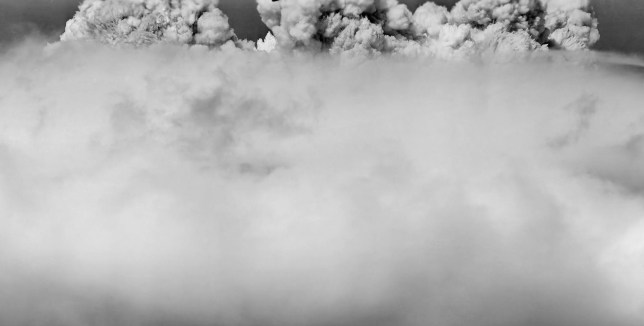
Thirty-three years after it happened, it’s taken an HBO mini-series about the Chernobyl disaster to give a terrifying insight into what took place. The first episode was truly apocalyptic. I had to keep reminding myself that it was not a work of fiction – that this really happened. It was so tense, in places, that I found myself shouting at the tv screen – ‘Oh no, please don’t do that! You’re all going to die!’ By the end of the episode, I was in a state of complete nervous tension and there were still four more to go.

The thing is though, I don’t remember being that worried about it at the time. I was a lot younger and more naïve, yes, but I can’t help thinking that maybe it was because we were never told the full facts. Or, maybe, I trusted that everyone involved had it under control. However the brilliant cast, including Jared Harris, Stellan Skarsgard and Emily Watson, convincingly depict a situation in which nothing, whatsoever, was under control. The Soviet Union did not even admit that a reactor had exploded until nearly three days after, when radiation from the disaster set off alarms at a nuclear power plant in Sweden.

What made it even more chilling for me is that, two months before it happened, in February 1986, I was involved with taking a group of Dorset students to Russia. It was a cultural trip and the only danger we felt was present was that one of our group of teenagers would forget the lessons we’d given them on Russian etiquette and upset the locals. Or that they might get arrested for breaking one of the many incomprehensible rules that were present in public places and enforced by armed soldiers. If we’d had Risk Assessment forms in those days, I doubt that a level 7 nuclear disaster would have been on it. And yet Moscow, where we were based, is only 850 kms from Chernobyl – too close when you’re dealing with a cloud of toxic emissions.

Ukrainian officials estimate that the land round the Chernobyl Plant will not be safe for permanent human settlement for another 20,000 years. Whether this an accurate figure or not, we will never know, but if the human race survives that long it will be the year 22019 (I assume that is how the date will be written). To give some idea of how far into the future this is, it’s worth going back in history 20,000 years. Then the earth was in the grip of the Ice Ages. A few thousand individuals eaked out an existence living in tribes and mammoths were still around.

After the incident, a concrete sarcophagus was built around the destroyed reactors. It contains 100kg of plutonium, with a half life of 245,000 years. If that sarcophagus collapses, it will be enough to poison 100 million people. Perhaps this sobering fact was what made them decide, in 2017, to enclose Reactor No. 4 with a vast steel shelter designed to prevent radiation leaks from the site. It will be airtight for 100 years. But what happens after that …?