They’re nutritious and plentiful: that’s why insects could be the food of the future

close-up-photo-of-grasshopper-511069-e1576062582407.jpg

Entomophagy – the eating of insects

When Monty Python aired the sketch ‘Crunchy Frog’, inspired by the introduction of the Trade description Act of 1968, in which inspectors question the owner of the Whizzo Chocolate Company about the ingredients of his Quality Assortment, including the suspect confection ‘Cockroach Cluster’, they tapped into the taboo subject of eating insects, or entomophagy as it’s officially known. Later, shows like I’m a Celebrity Get Me Out of Here added the revulsion element to the proceedings with the eating of live insects in the bushtucker trials, discontinued in 2019, after complaints of cruelty from animal rights groups.

Apart from the accidental consumption of insects, which I like to refer to as the ‘slug in lettuce’ moments, it’s fair to say that people in the western world have not embraced the idea of eating insects as part of a nutritional diet. However, and this might come as a shock to some, we’re already eating insects on a regular basis and have been for years. A certain amount of ‘insect material’ is allowed in food, since it causes us no harm. I won’t go into what foods contain insect parts, but it is a pretty long list. The truth of the matter is this – insects have been eaten for thousands of years in many countries around the world and continue to be eaten, and enjoyed, by two billion people. And everyone’s just fine!

There are so many reasons why we should all be eating insects. With an ever growing population and the need to produce food to feed it, insects could be a sustainable, environmentally friendly solution to fighting world hunger in the future. Farming insects would have less of a carbon footprint than the farming of cattle, sheep, pigs and poultry and could provide developing countries with a viable form of agriculture, since insects can be bred in a lot of different climates, many of which are unsuitable for traditional farming.

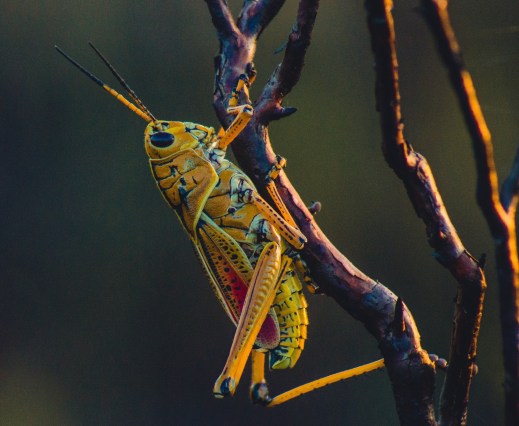
Then there’s the nutritional value of insects. They are packed full of protein, amino acids and antioxidants and are, not surprisingly, low in fat, making them a very healthy eating option. So what insects are edible? Well, there is a very large number, the most common being crickets; grasshoppers; mealworms (well, it’s in the name, isn’t it); scorpions and ants. This list is modest compared to the huge range of insects eaten on a daily basis in the developing world, including witchetty grubs, cicadas, giant water beetles and wasp eggs!

Sainsbury’s is the first supermarket in the UK to stock an insect food product, with the introduction in their snack range, of Eat Grub’s smoky BBQ crunchy roasted crickets! In addition, there are a growing number of restaurants that regularly include insects as part of their menus. One such establishment is Archipelago in London which has several insect based dishes on offer, including a dessert featuring chocolate-covered locusts. Not that far away from a Cockroach Cluster, I’d say. Monty Python as prophet. But we’re not laughing now!


Right to repair?

broken mobile phone

R.I.P.

Recently, my mobile phone died on me only a few months before my free update was due. For a week, I tried to ignore the signs, the flickering screen; the way it flashed on and off; and then, the final stage, the fading of the display to pastel shades, making it appear as if its non-fast colours had been dipped in a strong detergent.

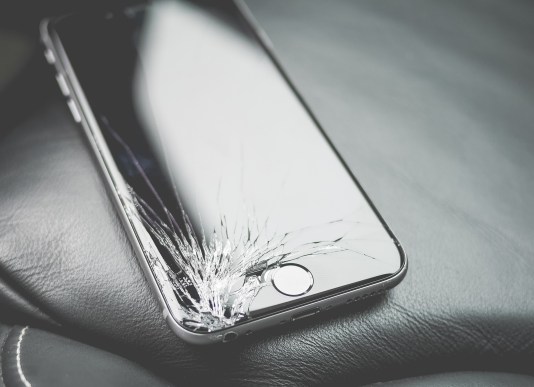
Then it happened. I switched it on the following morning and there was no display at all. I knew it was on, that they were there – the icons, the keypad, the apps, everything, alive beneath the blackness. But if you can’t see them, what can you do? It’s game over. So I made my way down to my local mobile phone shop. With misplaced optimism, I thought I’d ask about the possibility of a repair. I needn’t have bothered, the assistant’s blank stare gave me my answer before he’d uttered a word.

He pointed to the cracked screen, as if to verify his case. I explained that I had dropped it and damaged the screen in two places shortly after I got it, about fifteen months ago. I was surprised to be told that this was what was causing the current situation and that it had suffered a gradual deterioration since that happened. I felt the need to mention that it had been working perfectly alright until a few days ago. ‘That’s how it goes,’ he said, philosophically, as he led me towards the display of shiny new models. Apparently the only option I had open to me was to buy a new one. I didn’t have time to argue with him.

So my phone, like so many others before it, was destined to join the ever growing mountain of junk. It’s a sobering fact that each year Britons throw away two million tonnes of electronic waste alone and I was about to add to it. What’s more, I was being forced to buy a replacement, fuelling climate change from the greenhouse gases released in the manufacturing process. It seemed to me like the world had gone mad.

There is, though, a glimmer of hope on the horizon. The EU will be introducing legislation obliging manufacturers to make their products longer-lasting and easier to repair. The move has been hailed as a step in the right direction by consumer groups and environmental lobbyists. The new rules, signed off earlier this year, will come into force from April 2021 and will apply to household consumer products such as lighting, display screens, washing machines, dishwashers and fridges – but not, as yet, smaller electronic devices.

For that we may all need to turn to one of the many repair cafes that have sprung up in recent years, where volunteers help people repair their electronic items. However, in an ironic twist, the EU legislation is likely to be a threat to these very organisations since, repair professionals are set to retain the right to conduct most repair operations, with the new rules stating that producers will have to make most spare parts and repair manuals available for their use only.

Later back home, I placed my old phone, pronounced dead before its time, into the bottom drawer of my bedside table along with all my other ex-phones. It lay snug inside its leather wallet case, the one that doesn’t fit my new phone because the new model is a few millimetres narrower. Yes, I was forced to buy another case, even though my old one was still in excellent condition. Happy days!


Photo by picjumbo.com from Pexels

How changing your diet could help the environment

beef-cooking-delicious-769289 (1)

What’s your food’s carbon footprint?

Lately I’ve been thinking about how to make my diet more environmentally friendly. Food production is responsible for a quarter of all greenhouse gas emissions that contribute to global warming, according to a University of Oxford study. There’s a great deal of information around at the moment about the impact that different foods have on the environment, but one thing’s for sure and that is that meat and other animal products are the main culprits, making up more than half of that figure. That’s why I’ve cut down my meat consumption to once a week and taken a very small step in the right direction.

However, the conclusion that most research comes to is that if we’re serious about reducing global warming, then we all need to become vegan. I strongly believe that this is true and that if the human race survives the consequences of all the environmental devastation we’ve created, then in the future we will all be eating plant-based foods. But like a lot of people, I don’t think that I can make this dietary transition in one step.

So, using the Climate Change Food Calculator (BBC News), I have tried to work out how I could do it in stages, looking at proteins to start with. Now, the calculator is simple and does not include all foodstuffs but it gives you a very good idea of how proteins compare on the ‘environmentally unfriendly’ scale. Beef is at the top of that scale. If you ate a 75g portion of beef 1-2 times a week, over an entire year, your consumption of beef contributes 604kg to your annual greenhouse gas emissions. In plain speak that is equivalent to driving a regular petrol car 1,542 miles; or heating an average UK home for 95 days; or 1 return flight from London to Malaga.

OK, so meat’s not good. What about fish, then? The calculator only gives you the option of farmed fish. Eating 140g (one cod fillet) 1-2 times a week over a year would result in a figure of 146kg per annum. That’s 373 miles by car and 23 days heating. But, whatever you do, don’t get on that plane, because you’re not going to get to Malaga. Interestingly, pork is only just below fish on the scale, with chicken quite a bit lot lower. I wasn’t expecting that. So if you can’t give up meat completely, then chicken is the option to go for.

Dairy foods are next, in particular – cheese. I love cheese, in all its varieties, so it was with a great deal of trepidation that I put it into the calculator. A 30g serving of cheese (that’s not much!) 1-2 times a week results in a figure of 75kg of greenhouse gas emissions; or 193 miles by car; or 11 days of heating. The amount of cheese I eat in a week is going to bump that figure up a huge amount. Something will have to be done here!

The most environmentally friendly protein is not beans; and it’s not tofu, which is a relief because, although I’ve never tried it, curdled soymilk pressed into cubes with coagulants doesn’t sound too appetising to me. It is, in fact, nuts. One handful of nuts, 1-2 times a week results in 1.1kg of greenhouse gas emissions which, over a year, equates to 3 miles by car; or 0.2 days of heating.


Photo by Malidate Van from Pexel

Survival: a basic instinct

action-activity-adult-1174461

“The instinct in humans and animals to do things that will prevent them from dying” – this no frills dictionary definition of the word ‘survival’ tells it like it is. So does this basic instinct, that has served humankind so well for millennia, still work for us in the 21st century? Of course, the answer is yes, but in an adapted way to suit the far more complex and sophisticated world that we live in. Although the environment has changed beyond recognition from the fight or flight days of our ancestors, human needs for survival haven’t. They remain constant – shelter, food and water, and clothing to protect our bodies from extremes of temperature and other hazards. However, it only takes an unexpected event or accident to throw a person out of their comfort zone and into survival mode.

At the end of last year, I broke my right wrist on holiday in Finland. Now I know that you can’t blame everything on climate change, but it did have a role to play in this. Usually in November, northern Finland (Lapland) is covered in a thick layer of powdery snow. However, in the week before we arrived, due to unprecedented high daytime temperatures, the snow had melted and then frozen in the sub-zero temperatures at night, resulting in solid sheets of ice everywhere. The choice was simple, stay inside and not venture out at all, or put crampons on your boots and take your chances. I did the latter! On the plus side, I did get to see the aurora on four nights – which was spectacular.

So there I was in a foreign country, in arctic conditions, with my right arm plastered up to my elbow. My first reaction was to burst out crying in an unashamed wave of self pity. However, after I’d got over the initial shock of what had happened and taken a few industrial strength painkillers, my survival instinct began to kick in. I realised that I needed to think about the situation in a calm and methodical way.

Being right-handed, a considerable number of things that I had previously taken for granted became a real problem. Most of the clothes that I’d brought with me became obsolete straightaway, as I was unable to get the plaster through the cuffs. This included my duck down coat, essential for surviving the freezing temperatures. Preparing and cutting up my food was impossible, as I couldn’t apply any pressure on my wrist. Trying to do this one-handed doesn’t work, I tried it many times. You need a knife and fork to get this right. At least I had a cabin for shelter, but I couldn’t light a fire.

In short, if I’d been on my own, I would have had to return home. However, even that would have been far from straightforward, trying to negotiate my luggage, getting in and out of vehicles and doing all the travel-like things that are difficult even if you have all your limbs intact. Instead I decided to stay the course with the help of my husband.

I reverted back to toddlerhood. Buttons and zips were done up for me. My food was cut up into bite-size pieces, or else, in a fit of frustration, I’d pick it up with my left hand, even in restaurants, people making allowances for me, seeing my predicament. It was surprisingly liberating to be excused the usual table manners. As for my clothes, I sacrificed a number of items by splitting the right arm seam. Most important, I discovered that I could still get my coat done up if I pushed my hand up to, but not through, the cuff.

So I survived. Well, of course I did. However, the whole experience made me give more thought to those with permanent disabilities who have to face these challenges every day of their lives and to the large number of people who, even in the 21st century, struggle to gain access to even the basic survival needs.