Space debris: how an astronaut’s discarded glove could cause havoc

astronaut-astronomy-cosmonaut-355956.jpg

Clearing up our rubbish

It seems that wherever humans go they will always leave behind their rubbish and space is no exception to this rather depressing fact. Over 60 years of space activity has resulted in a great deal of space debris being left behind to float aimlessly in orbit around the Earth.

Current estimates indicate that there are almost 130 million objects in space of various shapes and sizes, ranging in size from a few millimetres to many metres and they can all prove hazardous. Amongst it all is known to be a glove lost by astronaut Ed White on the first American space-walk back in 1965. Even something as tiny as a fleck of paint, too small to be tracked, has the potential, when travelling at speeds of up to 17,500 mph, to cause damage. A number of space shuttle windows have had to be replaced because of paint fleck damage. And that’s just the small stuff.

Over 900,000 objects are considered big enough to damage or completely destroy entire spacecraft should they be involved in a collision. Objects like old satellites, spent rocket stages and fragments caused by their disintegration and collisions. In 2009, a defunct Russian satellite collided with and destroyed a functioning U.S. commercial satellite. The collision caused an extra 2,000 pieces of trackable debris to be added to the existing inventory of space rubbish.

NASA has well-established rules for tracking and dealing with possible collisions with such objects, including the most major of these, the evacuation of a space station. Debris avoidance manoeuvres are planned according to the probability of collision and the impact to mission objectives and risk to the crew. Over the last 10 years several collision avoidance manoeuvres have been conducted.

However the problem is not going to go away, in fact it will only get worse as more and more bits of space junk are added to what’s already up there. The only answer is to get rid of it. And that’s exactly what a 100kg satellite called RemoveDebris UK has been doing, by trialling a number of technologies that could be used in the future to deal with the clear up of space debris. The tests, using a harpoon and nets, have been successful and could open the door to a solution to the problem.

Simon Fellowes, from the Surrey Space Centre and manager of the consortium behind RemoveDebris said this, “As a university, we’ve given proof of concept for the basic ideas; we’ve shown the technology-readiness has reached a certain level. It’s now for industry to turn these concepts into a commercial product or business.”

Let’s hope that someone heeds his words and takes action before the very real prospect of space tourism becomes the norm, because that amount of debris floating about on the space highways is an accident waiting to happen.
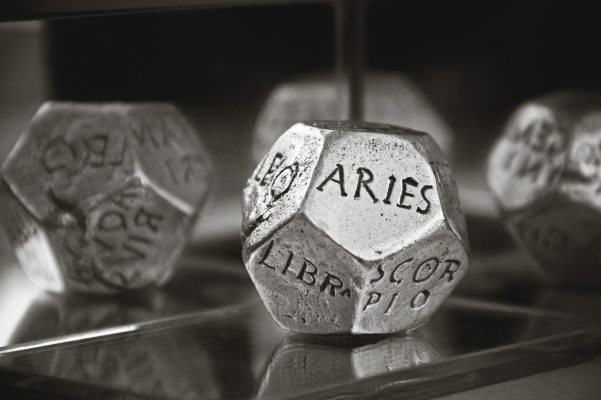


Astrological chaos: did our zodiac signs change or not?

astrology-astronomy-blur-159670.jpg

Astrology versus Astronomy

In 2016 NASA dropped a bombshell informing the world that instead of 12 zodiac signs there were, in fact, 13 and that what we had always thought were our star signs were no longer correct. Then, showing a complete lack of empathy for those who felt that their lives had been turned upside down by this revelation, they stated – “Here at NASA, we study astronomy, not astrology. We didn’t change any zodiac signs, we just did the math.” The name of the new star sign was Ophiuchus.

Unfortunately, being NASA, their argument was pretty watertight. When the ancient Babylonians created the zodiac about 3,000 years ago they wanted it to correspond with star constellations. However there was a snag. They were working with a 12 month calendar, but there were 13 constellations. So one had to go. At least they made the correct choice and ditched the one with the most unpromising name.

There was also the small matter of the Earth’s axis which NASA argued doesn’t point in the same direction as it did back then and therefore all the signs have different date ranges now.

So here they are, the zodiac signs and dates according to NASA:

Capricorn:   Jan. 20 to Feb. 16   Aquarius:   Feb.16 to March 11

Pisces:   March 11 to April 18   Aries:   April 18 to May 13

Taurus:   May 13 to June 21   Gemini:   June 21 to July 20

Cancer:   July 20 to Aug. 10   Leo:   Aug. 10 to Sept. 16

Virgo:   Sept. 16 to Oct. 30   Libra:   Oct. 30 to Nov. 23

Scorpio:   Nov. 23 to Nov. 29   Ophiuchus:   Nov. 29 to Dec. 17

Sagittarius:   Dec. 17 to Jan. 20

Needless to say, the astrology world wasn’t having any of this. Ignoring the criticism that astrology is a pseudoscience, they made their case and agreed that NASA was right that Ophiuchus does exist as a constellation, but argued that the constellations are not the same as signs. The Tropical Zodiac is not meant to be aligned with the constellations, so therefore the astrologers never had it wrong. The zodiac signs are based around the Earth’s relationship to our own Sun, not alignments with other Stars (Suns). For example: someone born on May 31st would be a Gemini (Sun sign), but their Sun would be aligned with the star Aldebaran in the constellation of Taurus.

OK, so I’m no longer a dependable, realistic and determined Capricorn. According to the new signs, I’m now Sagittarius, cheerful, optimistic and energetic. This doesn’t sound like me, at all. At least I’m not Ophiuchus. It was a close call though, because I only missed that fate by one day.

Not that I believe in any of it, but I know that NASA’s not right. A Capricorn woman tends to be very stubborn. She believes that her judgments and decisions are always right, thus changing her viewpoint is next to impossible. So, with that in mind, I am still a Capricorn and I ain’t budging!