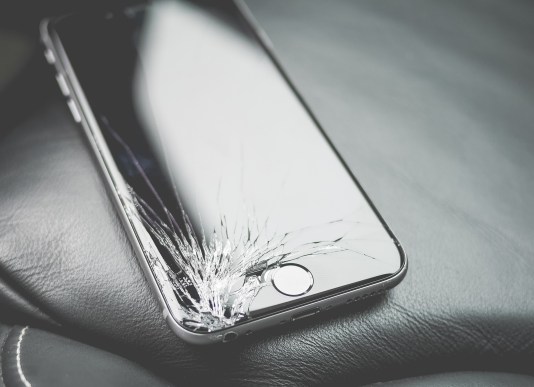
R.I.P.
Recently, my mobile phone died on me only a few months before my free update was due. For a week, I tried to ignore the signs, the flickering screen; the way it flashed on and off; and then, the final stage, the fading of the display to pastel shades, making it appear as if its non-fast colours had been dipped in a strong detergent.
Then it happened. I switched it on the following morning and there was no display at all. I knew it was on, that they were there – the icons, the keypad, the apps, everything, alive beneath the blackness. But if you can’t see them, what can you do? It’s game over. So I made my way down to my local mobile phone shop. With misplaced optimism, I thought I’d ask about the possibility of a repair. I needn’t have bothered, the assistant’s blank stare gave me my answer before he’d uttered a word.
He pointed to the cracked screen, as if to verify his case. I explained that I had dropped it and damaged the screen in two places shortly after I got it, about fifteen months ago. I was surprised to be told that this was what was causing the current situation and that it had suffered a gradual deterioration since that happened. I felt the need to mention that it had been working perfectly alright until a few days ago. ‘That’s how it goes,’ he said, philosophically, as he led me towards the display of shiny new models. Apparently the only option I had open to me was to buy a new one. I didn’t have time to argue with him.
So my phone, like so many others before it, was destined to join the ever growing mountain of junk. It’s a sobering fact that each year Britons throw away two million tonnes of electronic waste alone and I was about to add to it. What’s more, I was being forced to buy a replacement, fuelling climate change from the greenhouse gases released in the manufacturing process. It seemed to me like the world had gone mad.
There is, though, a glimmer of hope on the horizon. The EU will be introducing legislation obliging manufacturers to make their products longer-lasting and easier to repair. The move has been hailed as a step in the right direction by consumer groups and environmental lobbyists. The new rules, signed off earlier this year, will come into force from April 2021 and will apply to household consumer products such as lighting, display screens, washing machines, dishwashers and fridges – but not, as yet, smaller electronic devices.
For that we may all need to turn to one of the many repair cafes that have sprung up in recent years, where volunteers help people repair their electronic items. However, in an ironic twist, the EU legislation is likely to be a threat to these very organisations since, repair professionals are set to retain the right to conduct most repair operations, with the new rules stating that producers will have to make most spare parts and repair manuals available for their use only.
Later back home, I placed my old phone, pronounced dead before its time, into the bottom drawer of my bedside table along with all my other ex-phones. It lay snug inside its leather wallet case, the one that doesn’t fit my new phone because the new model is a few millimetres narrower. Yes, I was forced to buy another case, even though my old one was still in excellent condition. Happy days!
Photo by picjumbo.com from Pexels
 sue yockney